
-
Je winkelmandje is leeg
Ga naar de shop om producten in je winkelwagen te plaatsen
What Types of Locks Are There?
Discover which types of locks you encounter in Europe: from padlocks and profile cylinders to oval cylinders, knob cylinders, interchangeable cores, and wall or mortise locks. This guide explains the key features of each lock type so you know exactly what to look for before you start lock picking.
Author: Ties

Before you start your sport of lock picking, it’s wise to first understand the different types of locks. Because locks come in all shapes and sizes. In this guide, I will show you exactly which locks you encounter in Europe and what to pay attention to.
Most information about installing locks can actually be skipped when you start working with your lockpick set. Because as a lock picker, you are really interested in opening the lock itself. The moving part inside the lock is called the cylinder. That is the part you normally operate with a key.
The shape of a lock plays an important role in how you open it. That’s why I will take you through all the common types of locks in Europe.
Padlocks
The most recognizable lock is of course the padlock. You see them everywhere. From small TSA suitcase locks to heavy industrial versions.
Padlocks are perfect for beginners. They are easy to find at any hardware store. You can hold them well while practicing. And the best part is the wonderfully satisfying click sound of a padlock opening.
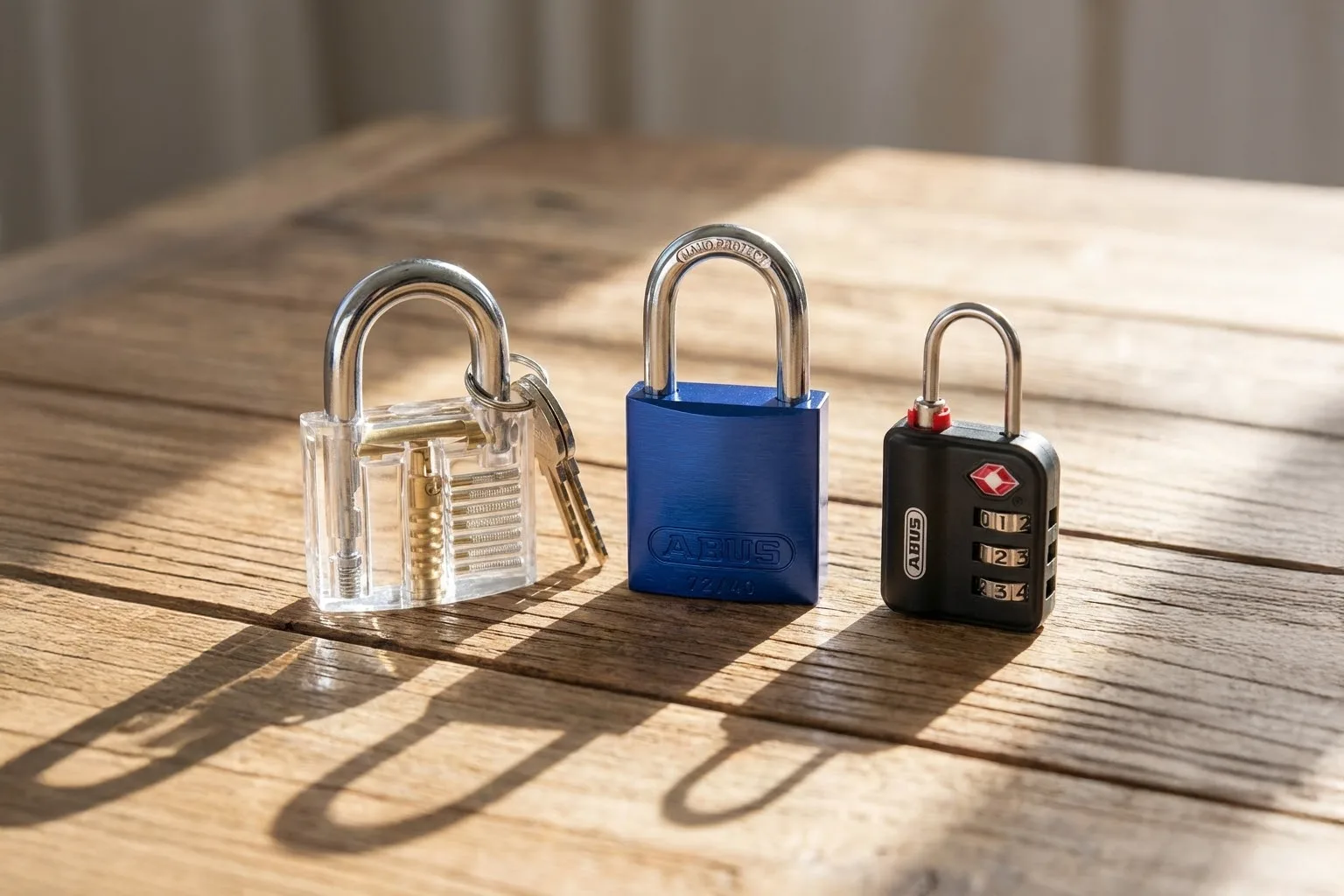
There are a few things you need to know about padlocks. In most cases, you open them by turning clockwise. Whether you are picking or using the key. The force you need varies greatly by brand. Therefore, always test first with the key if possible.
Padlocks vary greatly in size and weight. For heavier versions, it’s better to use a bench vise. This way, you can hold the lock securely while practicing.
Profile cylinders (Euro profile)
In Europe and the rest of Europe, you mainly see profile cylinders. We also call them Euro cylinders. They are found in almost all front doors of houses and apartments.
You recognize a profile cylinder by its characteristic shape. They vary in length but always have the same recognizable construction. The part where you insert the key is in the middle.
Many profile cylinders are double-sided. This means you have a keyhole on both sides. Some have a turn knob on the inside instead of a keyhole. In competitions, you usually get to choose which side you pick.
Good to know: The shape of the profile cylinder fits well in your palm. Many lock sport enthusiasts prefer to hold this rather than use a bench vise. During long sessions, a bench vise can cause hand cramps.
Do you want to practice with a cylinder lock? Then check out our selection of practice locks.
Oval cylinders and Swiss profiles
The profile cylinder has a few variations. The Swiss format resembles it, but the lower part is centered in the cylinder. When the lock is mounted, you only see the silver part.
There are also oval-shaped cylinders. You mainly see them in England and Scandinavia. They look like a profile cylinder but have an oval shape. The top and bottom are equally wide.
The main difference between these variants lies in the mounting method. For lock picking, it doesn’t matter. They all work in the same way.
Knob cylinders (Key-in-Knob)
In Europe, you don’t see them very often, but in America, knob cylinders are very popular. These small cylinders fit into a door knob or handle. Hence the name Key-in-Knob, or simply KIK.
KIK cylinders look like a small profile cylinder. Their shape is less recognizable because everything except the keyhole is hidden in the knob.
High-quality padlocks that you can disassemble sometimes also contain a smaller KIK cylinder. American-brand locks are a good example of this.
Note: KIK cylinders are difficult to hold due to their small size and sharp edges. A bench vise or 3D-printed holder can be helpful.
Interchangeable cores (IC cylinders)
An interchangeable core looks like a number eight or a snowman. A metal rod sticks out from the side. We call that the control lug.
IC cylinders are mainly found in office buildings. They are popular because you can quickly replace them with a special key. If someone loses a key, you don’t have to replace the entire lock. You just swap the core.
There are different formats:
- SFIC (Small-Format): Small and symmetrical with two equal circles
- LFIC (Large-Format): Larger with two circles of different sizes
- RC (Removable Core): Similar to LFIC but less standardized
Warning: Picking IC cylinders is difficult for beginners. The mechanism that allows for quick removal can somewhat hinder lock picking. Start first with simpler locks.
Wall locks and mortise locks
Wall locks are often used in night locks. Mortise locks are commonly seen on commercial doors. They are about 3.5 centimeters in length and width.
From the front, they look alike. The difference lies in how they are mounted:
Wall locks are smooth but have two threaded holes at the back. You attach them to the door surface.
Mortise locks have a threaded housing that allows you to screw the entire cylinder into the lock. This is then placed in a recess in the door.
Are you considering destructive breaking methods? Then check out our page on lock breaking or the cylinder puller. Note: these are methods that permanently damage the lock.
Cabinet locks
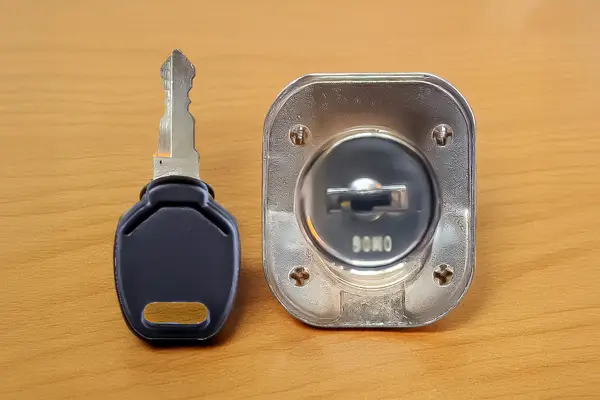
Finally, we have the mortise cabinet lock. This is a large rectangular lock with a non-removable cylinder. The security is built into the cabinet body.
You mainly see this type on old doors and in England. The rectangular cabinets fit into a recess at the edge of a door. They are often used with lever locks.
Ready to get started? Now that you know which types of locks exist, you can get to work. Start with a simple padlock or choose a special practice lock. View all practice locks
Summary
In this article, I have shown you which types of locks you encounter in Europe. From the simple padlock to more complex cylinders. Each type has its own characteristics and challenges.
The shape of a lock often determines how you should approach picking it. By getting familiar with the different types, you will know better what to expect. Whether you are buying, trading, or practicing with locks.
Do you want to learn more about lock picking? Then check out our other educational articles or start directly with a beginner lockpick set.

More Lockpicking Blogs
Want to learn lockpicking? With the right lockpick set and our guides, you can open your first lock within just a few hours. Whether you choose a beginner lockpicking set or professional lockpick tools, our articles will teach you all the techniques step by step.
How sound can betray your key and open your lock
Researchers from the National University of Singapore discovered that the sound of a key in a lock reveals what that key looks like. With the SpiKey app and just...
Key Broken in Lock? 5 Methods + Costs [2025]
You turn your key, hear a click, and BAM – you’re left with half in your hand. No!! That was… Read more »
Opening Locks with Aluminum Foil
Foil impressioning is a clever technique to open high-security dimple locks using only a blank key and aluminum foil. Discover how this method works, why it also works on...
How Do I Open a Mailbox? Dutch Mailbox Locks
Mailbox blocked or lost key? Dutch mailboxes primarily use wafer locks and pin tumbler locks. In this article, we explain how these locks work, what the differences in security...