
-
Je winkelmandje is leeg
Ga naar de shop om producten in je winkelwagen te plaatsen
Cylinder Lock Opening or Replacing? This is How a Cylinder Lock Works
How exactly does a cylinder lock work, and when should you replace it? In this guide, we explain the basic components of a pin tumbler lock, discuss security classes and SKG certification, and show how lockpickers open this type of lock. You will also receive practical tips for recognizing an outdated or insecure lock and choosing a good replacement.
Author: Ties
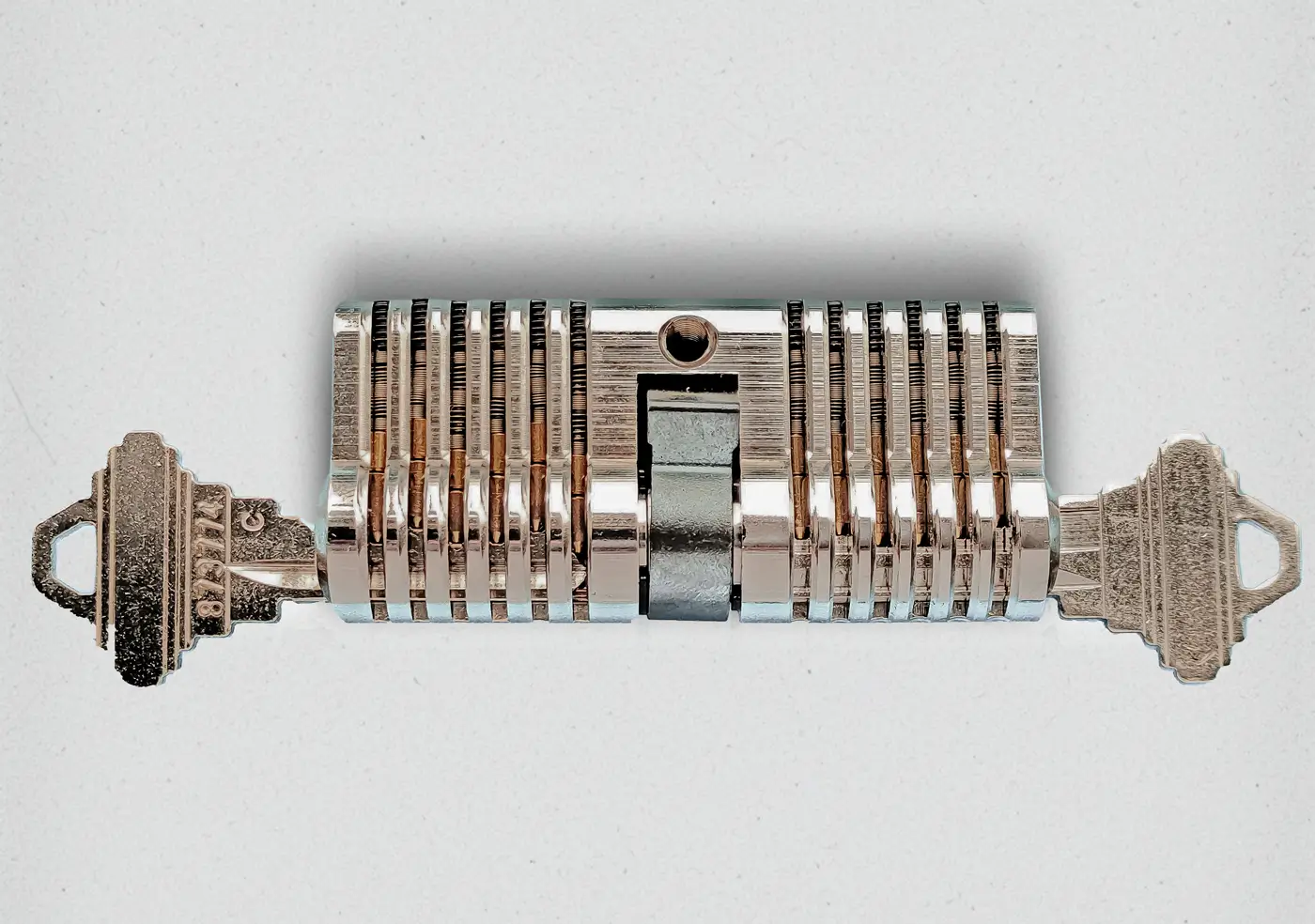
A pin cylinder lock
is the most commonly used lock type in the world, found in 95% of homes in the Netherlands. The lock is also known as a pin tumbler lock. It works through a series of pins that are raised to the exact height by the correct key.
How Does a Cylinder Lock Work?
The Basic Components
Let’s start with the basics of the lock. A cylinder lock may seem complex, but it’s not that bad. A cylinder lock is somewhat similar to a code lock. The components inside the lock determine what the code is that opens your lock.
- Housing: The fixed outer part that contains the rotating core
- Rotating core (rotor/plug): The inner part that rotates with the key
- Keyhole (keyway): The profile that only the correct key fits into
- Shear line: The crucial boundary between the housing and the core – this is where the magic happens!
- Pin system: The security of the lock
💡 Did you know? The holes where the pins sit? They are never 100% perfectly drilled! There is always a deviation of about 0.025mm. That’s thinner than a hair, but it’s precisely because of those small imperfections that lockpicking is possible.
You can read more about this in our blog about lockpicking.
The Pin System in Detail
The key pins of a lock always have different lengths, so they can create a unique code for each lock. The diameter of each pin can vary by brand. For example, the pins in Sparrows practice locks (officially Schlage) are 2.92mm thick. Each manufacturer often has a limited number of standard heights for pins.
In this document, you can find many different thicknesses and heights of pins, see here.
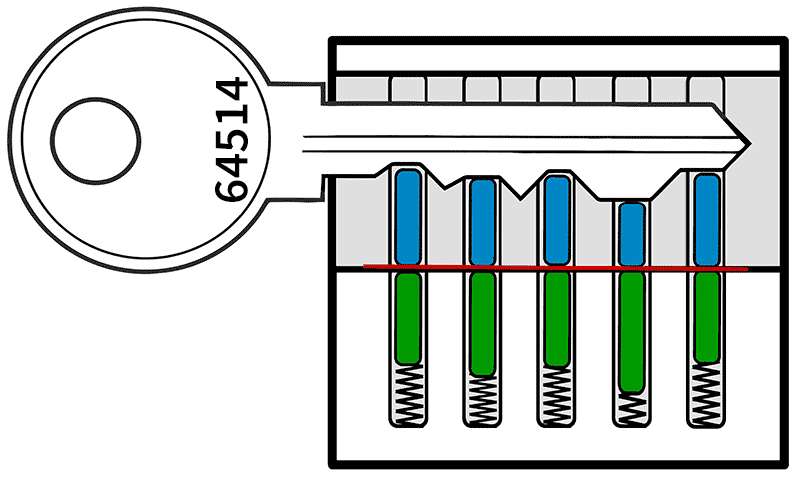
Driver pins often have the same length. They are designed to block the rotation of the core. The pressure that the springs exert on the driver pins is very light, comparable to about 2-5 N/m.
Why Does the Door Open?
When you insert the correct key into the lock, you have entered the correct code. The peaks and valleys of your key push all the pins to exactly the right height. When all the pins are perfectly aligned (the shear line), the core can turn, and your door opens!
Want to really understand this? Then I recommend looking at a lockpick practice lock. You will see how the pins move, and you can easily set the lock yourself!
⚙️ The Binding Order Principle
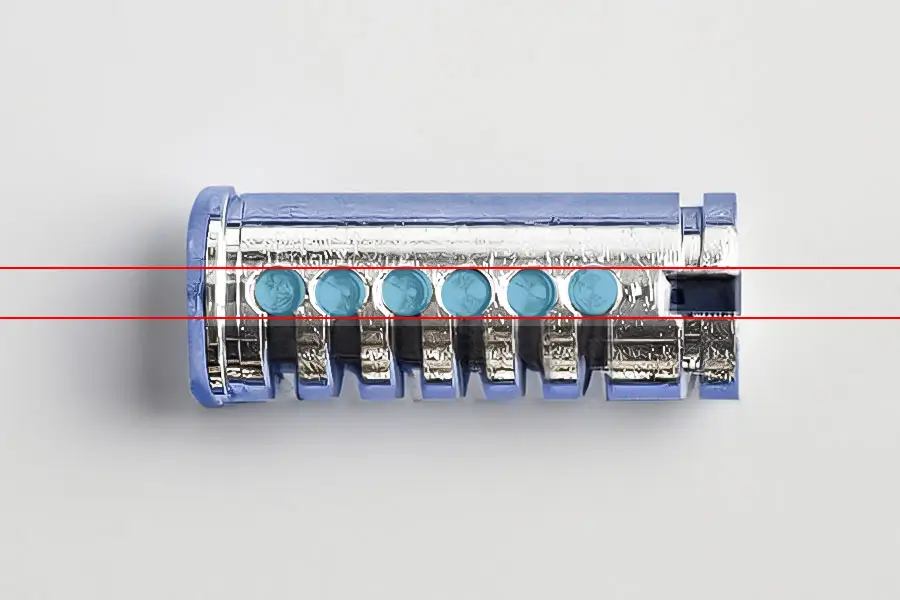
Due to those production tolerances of ±0.025 mm, a ‘binding order’ occurs. This is the order in which pins bind when tension is applied. This principle is fundamental to lockpicking and is determined by microscopic differences in the alignment of the pin chambers.
The Key-Lock Interaction
The key has specific cuts (bitting) that exactly match the lengths of the key pins. A crucial concept is the MACS principle.
MACS – Maximum Adjacent Cut Specification
MACS (Maximum Adjacent Cut Specification) is a technical limitation that determines how much two adjacent cuts in a key may differ in depth. This specification prevents keys from having too sharp transitions between consecutive cuts.
Why is MACS important
Prevents hook formation:
With too large differences, hook-like protrusions form that cause the key to snag when inserting
Protects against wear: Gradual transitions lead to less friction and longer lifespan
Guarantees functionality: The key can be smoothly inserted and removed without getting stuck
Practical example:
In an Abus lock with a MACS value of 3, the difference between two adjacent cuts may be a maximum of 3 positions. A key with code 8-1-8-1 (difference of 7 positions) violates this rule and will cause problems. A code 8-5-8-5 (difference of 3) is allowed.
Replacing a Cylinder Lock
Replacing a cylinder lock is a task that you can perform yourself with the right knowledge.
Measuring a Cylinder Lock – Step by Step
⏱️ Total time: 5 minutes
Measure from the center
Find the center of the screw in the door hardware. This is your reference point for all measurements.
Find the center of the screw in the door hardware. This is your reference point for all measurements.
Measure outward
Measure from the center of the screw to the outside of the door (street side). Note this measurement in millimeters.
Measure from the center of the screw to the outside of the door (street side). Note this measurement in millimeters.
Measure inward
Measure from the center to the inside of your house. Also note this measurement.
Measure from the center to the inside of your house. Also note this measurement.
Note as inside/outside
Write down the measurements as, for example, 30/30mm or 35/40mm (inside/outside).
Write down the measurements as, for example, 30/30mm or 35/40mm (inside/outside).
💡 Common mistake: People often measure from the edge of the door instead of from the screw. The screw is always your reference point – remember that!
Lost Key? Here’s How to Get the Lock Out Anyway
If you need to replace the cylinder lock without a key, fortunately, there are a few alternatives.
Method 1: Drilling Out
Drilling out a cylinder lock is the fastest method but destroys the lock. Use a 6mm metal drill bit and drill precisely through the center of the cylinder where the pins are located.
- Use a 6mm metal drill bit (HSS drill)
- Drill precisely in the center of the cylinder
- Go slowly – drilling metal requires patience
- After about 2 cm of drilling, you can pull the cylinder out
Option 2: Lockpicking (For the Patient)
Lockpicking is a skill you need to learn. The lock remains intact with this method, as long as you proceed carefully. So you can potentially reuse it:
- You need a lockpick set
- Expect 15-30 minutes of practice for a simple lock
- We explain how lockpicking works
- YouTube has good instructional videos
- A perfect skill to have for emergencies
Advantage: You learn something new and the lock stays intact.
Method 3: Plug Spinner
A plug spinner can turn a misaligned lock to the correct side without having to pick it again. Ideal for such emergencies.
Method 4: Call a Locksmith
Calling a locksmith is the surest option:
- Costs between €80-150 (depending on the time)
- Resolved within 30 minutes
- You often get a new lock installed immediately
- More expensive at night and on weekends
Tip: Ask in advance for the total price including call-out fees!
Read more: Article on opening locks without a key.
What Will a Good Lock Cost You?
The price of a cylinder lock varies greatly. Here is an honest overview of what you get for your money:
| Type Cylinder | Price Range | Protection | Suitable For | My Honest Opinion |
|---|---|---|---|---|
| Budget Lock | €15-30 | Basic | Storage, shed | Great for places without valuable items |
| SKG* Cylinder | €30-50 | 3 min resistance | Interior door, office | Good for indoors, too light for exterior door |
| SKG** Cylinder | €40-80 | 5 min resistance | Front door home | Sweet spot – best price/quality for home |
| SKG*** Cylinder | €80-150+ | 5+ min + extras | High value objects | Only needed in special circumstances |
My advice after 8 years of experience: Buy SKG** for your front door. The difference between no star and two stars is enormous. The difference between two and three stars is mostly marketing, unless you really have something to hide.
Security Classes and SKG Certification
SKG Star System Explained
The SKG certification uses a star system:
- SKG*: Minimum 3 minutes resistance against burglary
- SKG**: Minimum 5 minutes resistance
- SKG***: Minimum 5 minutes resistance PLUS core pull protection
🔬 EN 1303 Grade D Specifications
Technical resistance requirements:
- 5-10 minutes drill resistance with HSS drills
- 40 chisel blows with 2kg hammer
- 30 defined torque moments
- 15kN (1530 kg) pulling force on the cylinder
Security Pins and Anti-Pick Technology
Modern cylinder locks use different types of security pins with these technical details:
Spool Pins
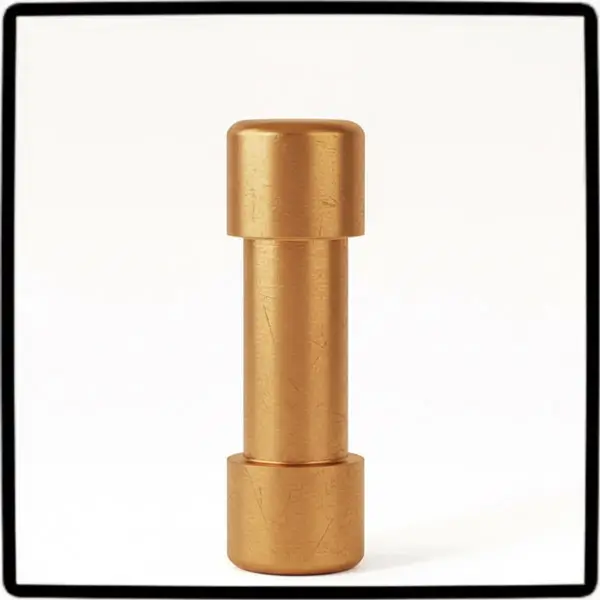
Effect: Create false sets due to the spool shape
Resistance: +40% picking time
Serrated Pins
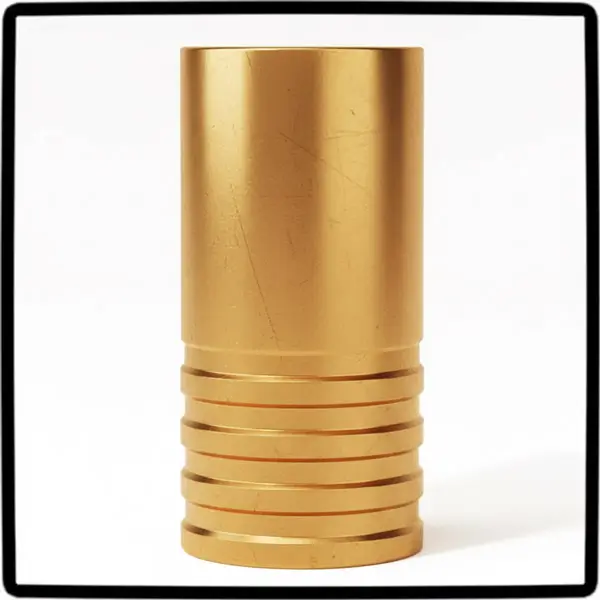
Grooves: 3-5 per pin
Effect: Multiple false gates
Resistance: +50% picking time
T-Pins (Mushroom)
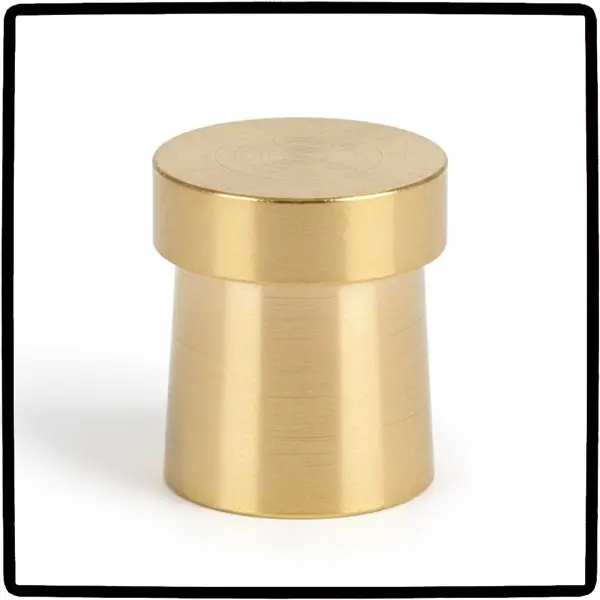
Heaviest anti-lockpick protection: Impossible for beginner lockpickers
Effect: Anti-bump protection
Resistance: Counter-rotation feedback
To learn to recognize security pins, we recommend the GrimGo Pins ’n Springs, which allows you to try out different pins.
Lockpicking of cylinder locks
Single Pin Picking (SPP) Technique
Single Pin Picking is the most effective method to open pin cylinder locks. It requires patience but gives the best understanding of how locks work.
⏱️ Learning time: 1-3 hours
Place the tension wrench
Use minimal tension (0.1-0.5 N⋅m) with a
.
Find the binding pinTest each pin until you find the pin that offers the most resistance.
Set the pinLift the binding pin until you feel a small click – the pin is now ‘set’.
Repeat for all pinsContinue until all pins are set and the cylinder turns.
You can read more about this in our blog about Single Pin Picking.
Start your Lockpicking Adventure
The Sparrows Tuxedo Set is perfect for beginners with euro profile cylinders. Includes all essential picks and a manual.
Raking Techniques
Raking is faster than SPP but mainly works on simple locks without security pins:
- Scrubbing: Back and forth motion with a rake pick
- Rocking: Rocking motion for European cylinders
- Success rate: 30-40% on standard locks, <5% on security pins
Read more about this in our blog about Raking and Rocking.
Euro profile cylinders vs Other Types
Euro profile cylinder Specifications
The euro profile cylinder is the standard in Belgium and the Netherlands, with specific DIN 18252 dimensions:
| Configuration | Total length | Application | Is a turn knob possible? |
|---|---|---|---|
| 30/30 | 60mm | Standard interior door | Yes |
| 35/35 | 70mm | Standard front door | Yes |
| 40/40 | 80mm | Thick doors | Yes |
| 30/40 | 70mm | Asymmetrical doors | Yes |
For cylinder locks with a turn knob, emergency knob cylinders are ideal, as you can also open them from the inside when a key is inserted on the outside.
Frequently Asked Questions about Cylinder Locks
How much does a cylinder lock cost?
Prices range from €15 for a basic cylinder to €150+ for an SKG*** cylinder with core pull protection. For normal home security, an SKG** cylinder priced at €40-60 is usually sufficient.
How do you measure a cylinder lock?
Measure from the center of the screw in the door hardware to both ends of the cylinder. Note the measurements as inside/outside, for example, 30/30mm or 35/40mm.
Can you replace a cylinder lock without a key?
Yes, by drilling out (destroys the lock), lockpicking (preserves the lock), or with a locksmith. This is only allowed on your own locks or with explicit permission.
What is the difference between SKG stars?
SKG* offers 3 minutes of break-in resistance, SKG** offers 5 minutes, and SKG*** offers 5 minutes plus extra features such as core pull protection and anti-drill pins.
How many keys do you get with a cylinder lock?
As standard, you receive 3 keys with a regular cylinder. With certificate locks (such as Abus Bravus), you often receive 5-6 keys plus a certificate of ownership for reordering.
How does a cylinder lock work?
A cylinder lock works via pins that are raised to the exact height by the correct key. This allows all pins to fall precisely on the shear line, enabling the cylinder core to turn and the lock to open.
Master Key System
Principle of Master Keying
Master keying is a system where different keys fit the same lock. This is made possible by adding extra driver pins (spacer pins) between the key pin and driver pin. This creates multiple shear lines on which the cylinder can turn.
Operation with Extra Driver Pins
Instead of one shear line per pin position, each extra driver pin creates an additional shear line. A cylinder with five pins and one extra driver pin per position thus has ten possible shear lines, allowing the lock to be opened with two different keys: the personal key and the master key (also known as ‘runner’).
Conclusion
The pin tumbler lock may be an invention from the 19th century, but it remains one of the safest forms of security. From the precision of ±0.025mm tolerances to modern security pins that make picking more difficult, every detail contributes to security.
Ready to Get Started?
Discover our complete collection of lockpick sets, practice locks, and security products. We also enjoy lockpicking ourselves and guarantee good quality and educational support.
Technical Appendix – Glossary
| Dutch | English | Explanation |
|---|---|---|
| Pin tumbler lock | Pin tumbler lock | Lock with pins as a security mechanism |
| Key pin | Key pin | Bottom pin that makes contact with the key |
| Driver pin | Driver pin | Top pin that blocks rotation |
| shear line | Shear line | Boundary between housing and core |
| Core | Core | Central core of the cylinder |
| Core pull protection | Anti-snap protection | Protection against cylinder snapping |

More Lockpicking Blogs
Want to learn lockpicking? With the right lockpick set and our guides, you can open your first lock within just a few hours. Whether you choose a beginner lockpicking set or professional lockpick tools, our articles will teach you all the techniques step by step.
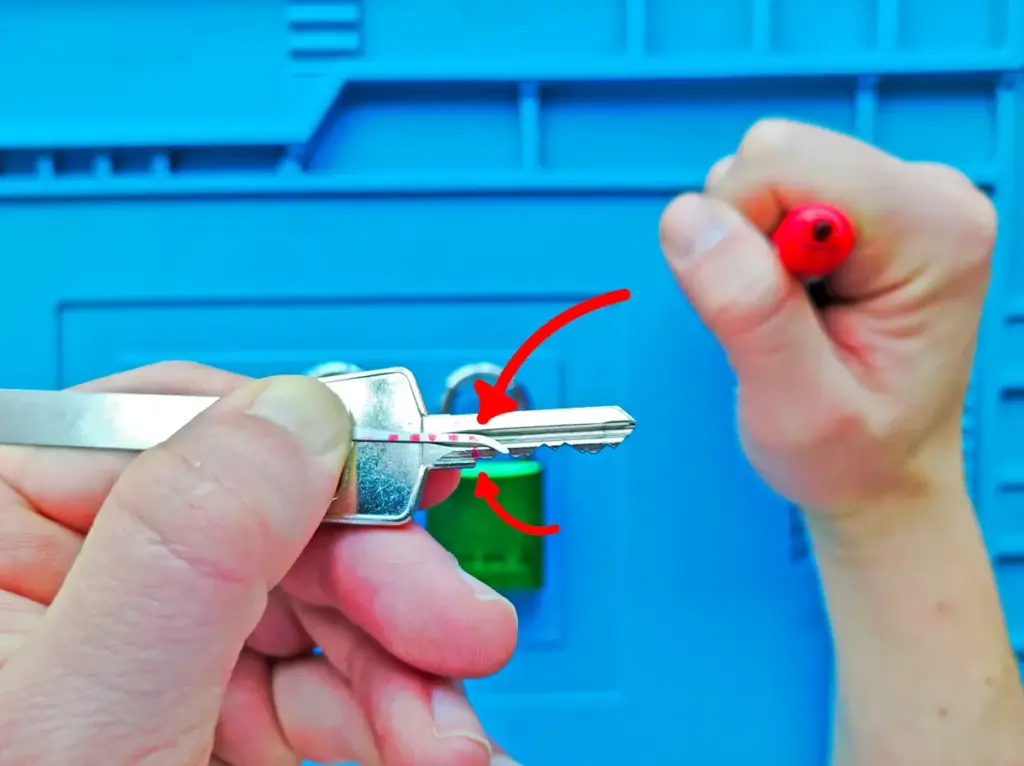
The Marking Technique – Lockpicking for Beginners
Learn how to mark your lockpick with a simple marker to learn lockpicking faster. This life hack gives you visual reference points, so you know exactly how deep to...
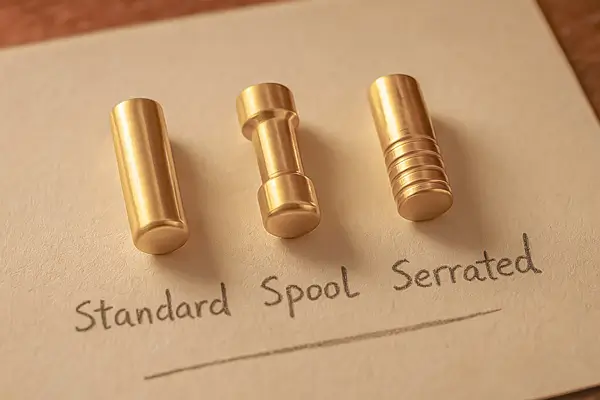
Security Pins in Lockpicking
Security pins such as spool, serrated, and mushroom pins make lockpicking significantly more difficult. In this article, you will learn how to recognize these security pins, what a false...

Lockpickers United (LPU) – Belt Ranking System & Community
Lockpickers United (LPU) is an international community for lockpickers with a unique Belt Ranking System. This guide explains what LPU is, how to join via Reddit or Discord, how...
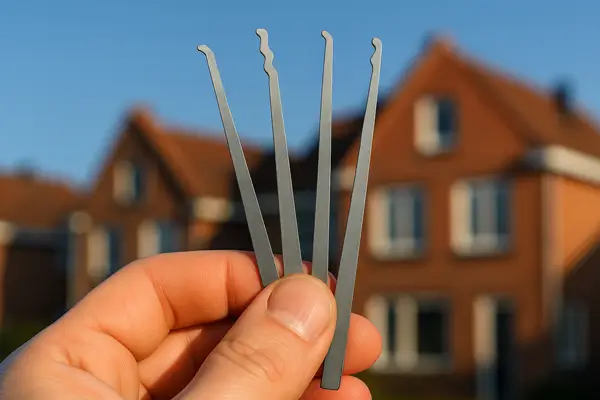
Making Your Own Lockpicks: DIY Guide & All Alternatives (2025)
Making lockpicks from wiper blades or feeler gauges is a fun weekend project to learn more about lock mechanisms. In this guide, I compare which DIY materials actually work,...