
-
Je winkelmandje is leeg
Ga naar de shop om producten in je winkelwagen te plaatsen
What is Core Pull Protection?
Core pull protection safeguards your door lock against a specific burglary technique where the cylinder core is forcibly pulled out of the lock. In this article, we explain how this protection works, which locks are equipped with it, and how you can effectively protect yourself against core pulling as a burglary method.
Author: Ties
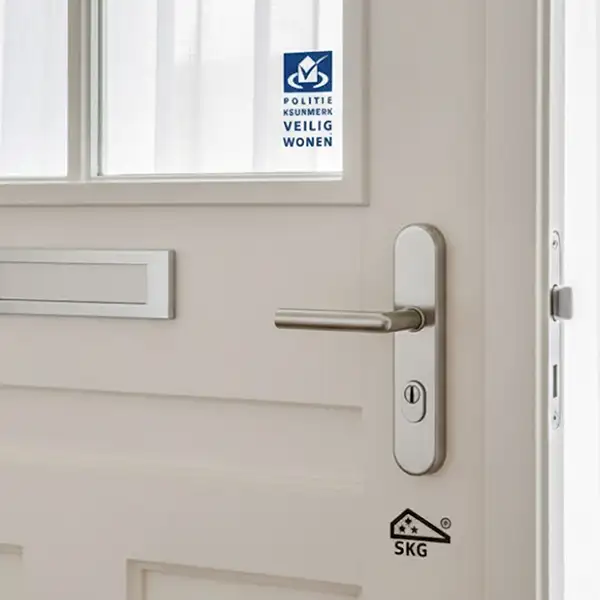
Every day, 61 homes in the Netherlands are broken into.Less than 1% of Dutch homes are well protected against this.
In this comprehensive guide, I will explain exactly what core pull protection is, how it works, what options are available, and most importantly: how you can truly protect yourself. Because believe me, after reading this article, you will look at your front door lock very differently.
What is core pull protection?
Core pull protection (also known as cylinder pull protection) is a special feature that prevents burglars from pulling or breaking your cylinder lock out. It comes in two main forms:
Option 1: A reinforced cylinder with a hardened steel bridge inside. This bridge is located exactly at the weakest point of the cylinder – where the fixing screw goes through. It can withstand up to 1,500 kg of pulling force. Some cylinders also have so-called “sacrificial break lines” – weak points designed so that only the outer piece breaks off, while the locking mechanism remains intact.
Option 2: A core pull rosette (also known as security fittings). This is a hardened metal plate that covers your cylinder from the outside. It has a small rotating rosette through which you insert the key. Because this rosette rotates with the key, burglars cannot screw into it, and they cannot apply tools to pull it.
To be honest: the best protection is a combination of both. But even one of the two makes your home significantly safer.
How does core pulling work as a burglary method?
Before you understand why core pull protection is so important, you need to realize how easy core pulling actually is. And it’s shockingly simple:
Step 1: The burglar screws a hardened steel screw into the keyhole of your cylinder. That takes 10 seconds.
Step 2: With a pair of pliers, hammer, or special cylinder puller, he pulls the cylinder towards him or breaks the cylinder in half. Since the fixing screw is located exactly in the middle, that is the weakest point. Crack, and the cylinder breaks.
Step 3: With a screwdriver, he turns the cam (the pivot point that operates the bolts) around, and the door opens. Total time: 20-30 seconds.
This method is also known as the “Bulgarian method” in the Netherlands. It requires ZERO technical knowledge. No lockpicking, no bump keys, no noise. Just brute force, and you’re in.
Research shows that 16% to 90% of all burglaries in the Netherlands occur through core pulling – depending on the source and region. The Centre for Crime Prevention and Security (CCV) has expressed “serious concerns” about this, especially since so many homes are still vulnerable.
How does core pull protection work?
Now for the good part: core pull protection is surprisingly effective. Here’s how both options work:
Reinforced cylinders with steel bridge
In a cylinder with core pull protection, there is a hardened steel core that runs through the cylinder. This core is located exactly where a normal cylinder would break – at the hole of the fixing screw. When a burglar tries to pull, the hardened steel pins in the lock grip onto this steel core. The result? The cylinder does not break, and the burglar can pull as much as he wants.
Some advanced cylinders (especially from the United Kingdom) use a different tactic: they do have a weak point, but one that they have designed themselves. If pulled, only the front piece breaks off. The locking mechanism remains intact and functional. The door stays locked, and you can still open it from the inside with the key. Cleverly designed.
Core pull rosettes as a physical barrier
A core pull rosette works differently: it is a physical barrier. It is made of hardened stainless steel or brass and is secured from the inside with extra long screws. The main component is the rotating rosette – a small plate that covers the keyhole and rotates with your key.
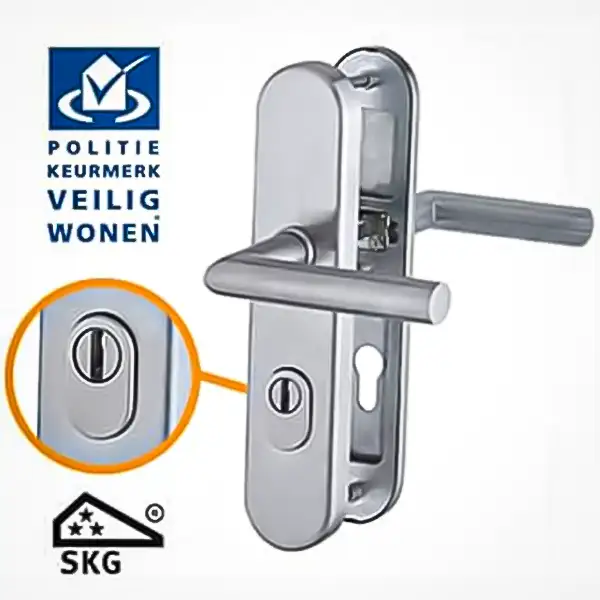
Because this rose rotates, a burglar cannot get a screw in. And because the entire cylinder is hidden behind the rose, there is nothing to grip onto. No cylinder that protrudes = nothing to pull off. However, it is important that your cylinder does not protrude more than 3 to 12mm past the rose, otherwise you can still apply tools to it.
Why is core pull protection so important?
If you are not yet convinced, here are the hard facts:
1. It is the most common burglary method. Between 16% and 90% of all burglaries use core pulling, depending on the region. In some cities, you hardly see any other methods anymore.
2. It is ridiculously fast. An experienced burglar is inside in 20-30 seconds. Even if your neighbors are paying attention, they won’t even notice that something is happening. No alarm going off, no windows breaking – just a quick crack and done.
3. It works on almost all locks. Do you have a multi-point locking system? It doesn’t matter. All bolts are controlled by that one cylinder. If that cylinder is vulnerable, then all those extra bolts are worthless. I see this misunderstanding with so many customers: they think their door is safe because of the multi-point locking system, but forget that the weakest point remains that cylinder.
4. It has been mandatory for new buildings since 2014. The Building Decree NEN5096-2012 requires core pull protection for all new homes. It is also mandatory for the Police Quality Mark Safe Living (PKVW). This does not happen just like that – the government and police know how big the problem is.
5. Insurers are increasingly demanding it. Many insurers require at least SKG*** cylinders, or offer significant discounts if you install it. If you do not have good security and a burglary occurs, your claim may be partially or completely denied.
Which locks have core pull protection?
Fortunately, there are now plenty of good options. Here are the most popular brands in the Netherlands:
M&C (Matrix & Comfort)
M&C has been active for over 30 years and their cylinders have standard SKG*** certification. The M&C Condor and M&C Matrix are popular here due to their good price-quality ratio (€85-125). The nice thing about M&C is that they are also easy to install yourself. Ideal for hobbyists and DIY enthusiasts.
NEMEF
NEMEF is a Dutch brand (part of ASSA ABLOY) and the NEMEF 132/9 NF3 is a budget-friendly SKG*** cylinder with built-in core pull protection. A great choice if you don’t want to spend too much but still want good protection.
Mauer
The Mauer New Wave 4 is SKG*** certified and is known for its excellent price-quality ratio. It is recommended by many locksmiths as one of the best in its class.
ABUS
ABUS is a German brand with a reliable reputation. The ABUS E90 and ABUS D6S both have anti-snap protection. ABUS also makes core pull roses that you can combine with different cylinders.
Other options
You also regularly see ISEO, dormakaba (penta), and BUVA in the Netherlands. Always pay attention to the SKG*** certification – that is your guarantee that the cylinder can withstand at least 1,500 kg of pulling force AND provides protection against lock picking, bumping, AND drilling.
Do you want to learn more about how cylinder locks work and what types there are? I have written an extensive guide on that.
How do you recognize if your lock has core pull protection?
This is a question I get constantly. Here’s how to check:
Check the SKG stars
SKG*** (3 stars) = ALWAYS has core pull protection. These cylinders must withstand at least 5 minutes against all burglary methods, including core pulling, lock picking, bumping, and drilling.
SKG** (2 stars) = Usually NO core pull protection, unless it explicitly states “with core pull protection.” These cylinders provide 3 minutes of resistance but are not protected against core pulling.
SKG* (1 star) = No core pull protection. Do not use for exterior doors.
The SKG logo must be permanently on the cylinder, usually on the side. It is a triangle with the stars inside.
Check for a core pull rose
A core pull rose is easy to recognize: it is a rectangular or round “blocking” over your cylinder, with a small rotating plate for the keyhole. If you do not see a cylinder protruding from the outside, but only a metal rose, then you probably have core pull protection via the hardware.
Check the age of your lock
Is your house built before 2014 and have you never replaced anything? Then there is a good chance that you do not have core pull protection. Most older homes have standard SKG** cylinders, and those are vulnerable.
Are you in doubt?
If you really are not sure what you have, you can remove the cylinder (unscrew one screw) and check for snap lines (grooves around the cylinder) or for a steel core inside. But honestly: if you are not sure, assume that you do not have it and upgrade.
Pros and cons honestly stated
Let me be honest: core pull protection is not a miracle solution, but it is incredibly effective. Here are the pros and cons:
Advantages
- Very effective: Increases the burglary time from 20-30 seconds to 10+ minutes. Most burglars give up and move on to the next door.
- Visible deterrent effect: A core pull rose is visible from the outside. Burglars recognize this and often skip your house.
- Affordable: A good cylinder costs €50-150. Much cheaper than the damage from a burglary (averaging €5,000+).
- Versatile: SKG*** cylinders also protect against lock picking, bumping, and drilling – not just core pulling.
- Self-installable: Replacing a cylinder is simple. I can teach any handy DIY enthusiast in 20 minutes.
- Insurance discounts: Many insurers offer a 5-15% premium discount if you have SKG*** cylinders.
Disadvantages and limitations
- No 100% guarantee: A highly motivated burglar with heavy tools can eventually get through any security. The goal is to make it so difficult that they give up and leave.
- Cylinder alone is less visible: If you only have a reinforced cylinder (without a rose), a burglar will only see that when they are already at work. They can cause damage to your cylinder before they give up. With a rose, you can see from the outside that the door is protected.
- Measurement is important: If you buy the wrong size cylinder and it protrudes too far, you are still vulnerable. Always measure carefully (from screw hole to both ends).
- Installing a rose is more complex: Installing a core pull rose is more difficult than replacing a cylinder. Sometimes you need to drill new holes. Professionals charge €100-200 for installation.
- Maintenance needed: Cylinders need to be lubricated 2x a year with WD-40. Never use graphite powder – it causes buildup and malfunction.
My advice? Combine an SKG*** cylinder with a core pull protection plate for maximum security. Do you have a budget for only one thing? Choose an SKG*** cylinder – it protects against multiple methods at once.
Frequently asked questions about core pull protection
What is core pull protection exactly?
Core pull protection is a security feature in your cylinder lock that prevents burglars from pulling or breaking the cylinder out. This is achieved through a hardened steel bridge in the cylinder that can withstand up to 1,500 kg of pulling force, or through a core pull protection plate that physically shields the cylinder.
How can I tell if my lock has core pull protection?
Check the SKG stars: SKG*** (3 stars) always has core pull protection. SKG** (2 stars) usually does not have this, unless specifically stated. Also look for a core pull protection plate – this is a metal plate with a rotating rosette over the cylinder. If your lock is from before 2014 and you have never replaced anything, it is likely that you do NOT have core pull protection.
What does core pull protection cost?
A cylinder with core pull protection costs between €50 and €150, depending on the brand and quality. A core pull protection plate costs €50 to €125. For a complete solution (cylinder AND plate), you will spend €100 to €250 per door. Professional installation costs an additional €100-200, but many people can do it themselves. Compare this to the average damage from a burglary (€5,000+) and it’s a bargain.
Is core pull protection mandatory?
Yes, since April 2014, core pull protection is mandatory for all new constructions according to the Building Decree NEN5096-2012. It is also required for the Police Quality Mark Safe Living (PKVW). Many insurers also require it or offer discounts if you have it installed. For existing homes, it is not legally required, but it is strongly recommended by the police and CCV.
Which brands of cylinders have good core pull protection?
The best brands in the Netherlands are M&C (Condor, Matrix), Mauer New Wave 4, NEMEF 132/9 NF3, ABUS (E90, D6S), and dormakaba penta. Always pay attention to SKG*** certification – this guarantees that the cylinder can withstand at least 1,500 kg of pulling force and protects against core pulling, lock picking, bumping, AND drilling. For more information about different lock types, check our other guides.
Can I install core pull protection myself?
Yes, replacing a cylinder is quite simple and usually takes 20-30 minutes. You only need a screwdriver and measuring tape. The most important thing is to order the correct size – measure from the screw hole to both ends of the cylinder. Installing a core pull protection plate is a bit more complex and may require drilling new holes. If you are unsure, consult a reliable locksmith.
Does core pull protection also protect against lock picking?
That depends on the type. A core pull protection plate ONLY protects against core pulling, not against lock picking or bumping. An SKG*** cylinder protects against everything: core pulling, lock picking, bumping, AND drilling. That’s why I always recommend choosing at least an SKG*** cylinder, or combining it with a core pull protection plate for double security.
What is the difference between SKG**, SKG***, and core pull protection plates?
SKG** cylinders offer 3 minutes of resistance against burglary attempts, but usually do NOT have core pull protection (unless explicitly stated). SKG*** cylinders always have core pull protection and offer 5 minutes of resistance against all methods. A core pull protection plate is a physical protection that you mount over your cylinder. The best solution: SKG*** cylinder + core pull protection plate.
Protect yourself now
I cannot emphasize enough: core pull protection is not a luxury, it is a necessity. With 61 burglaries per day in the Netherlands and core pulling as the most popular method, you cannot afford to be vulnerable. It only costs €50-250 per door, it is often easy to install yourself, and it can literally save you thousands of euros in damage AND emotional stress.
My advice? Check today if your locks are SKG*** certified. If they are not, upgrade as soon as possible. Start with your front door, then your back door, and work through all access doors. Combine an SKG*** cylinder with a core pull protection plate wherever possible for maximum protection.
Want to get started? At Lockpickings you will find everything you need, from quality cylinders to professional locksmith tools. And don’t forget: if you want to learn more about lock security, lock picking, and how locks work, we have a whole library of informative blogs.
Stay safe, and don’t make it easy for burglars!

More Lockpicking Blogs
Want to learn lockpicking? With the right lockpick set and our guides, you can open your first lock within just a few hours. Whether you choose a beginner lockpicking set or professional lockpick tools, our articles will teach you all the techniques step by step.
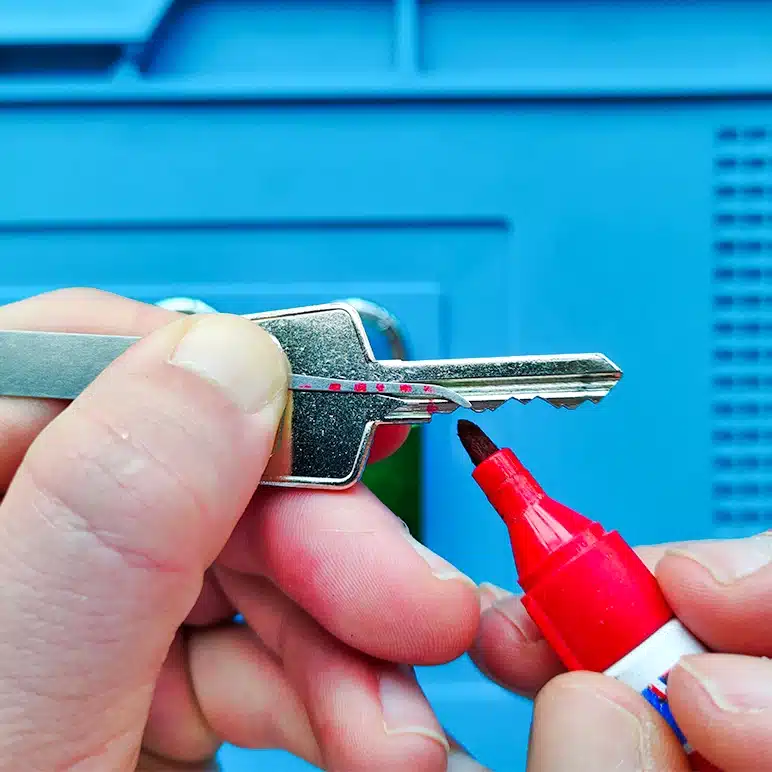
My First Abus Lock Lockpicking
Discover how to lockpick the challenging ABUS 72/40 with step-by-step tips on raking, single pin picking, and using the right tension wrench. Also learn about the marking technique and...
GrimGO Prototype: FEA analysis
A technical research report on the GrimGO prototype phase, in which an FEA analysis (Finite Element Analysis) was conducted on more than 35 lockpick designs. Discover what insights this...
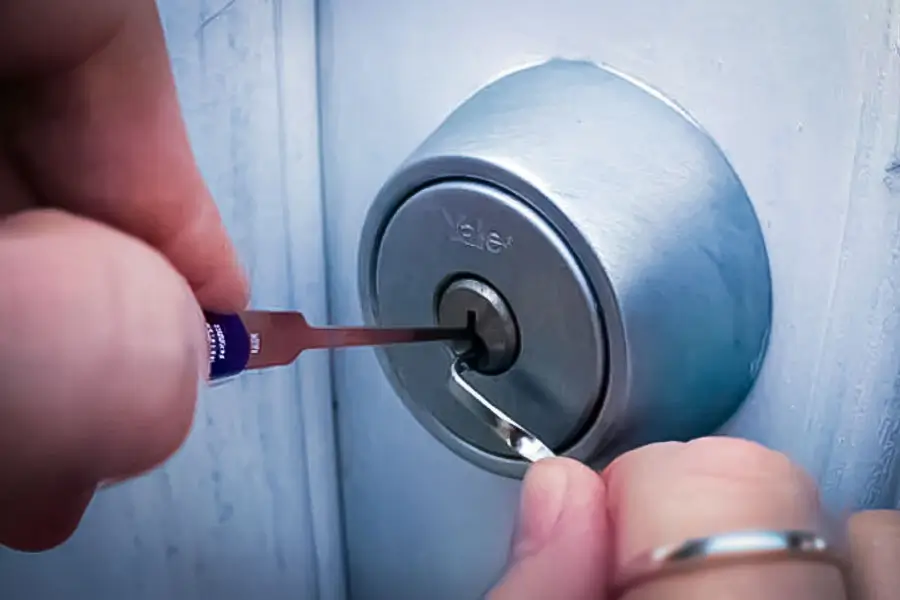
Why You Should Learn Lockpicking Now
Lockpicking has an undeserved negative image, but is primarily a valuable and fascinating skill. Discover how it helps you better understand your own security, how it provides solutions in...
Pin Tumbler Locks Guide
Our blog offers an in-depth look at Pin Tumbler locks and lockpicking, with insights for both newcomers and experts. We explore how Pin Tumbler locks work, discuss specialized lockpicking...