
-
Je winkelmandje is leeg
Ga naar de shop om producten in je winkelwagen te plaatsen
Single Pin Picking (SPP) Technique [2025]
You can lockpick a lock using the SPP technique. Use a tension technique and a lockpick with these tips to learn it.
Author: Ties
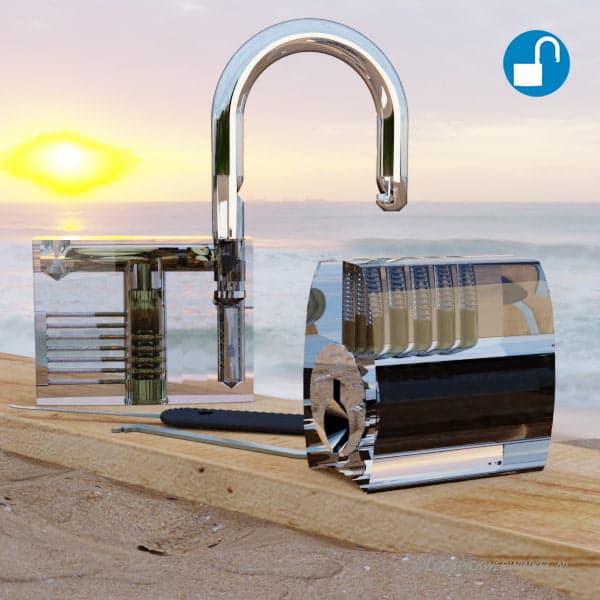
Single Pin Picking (SPP): The Complete Master Technique for Lockpickers [2025 Guide]
What is Single Pin Picking (SPP)?
Single Pin Picking is the art of manipulating lock pins one by one to precisely simulate the shape of a key. Unlike rake techniques where you attack multiple pins at once, SPP gives you complete control over each individual pin.
💡 Core Principle: When your key is inserted into the lock, the profile with peaks and valleys raises each pin to the exact height. With SPP, you manually recreate this process with your lockpick and tension wrench.
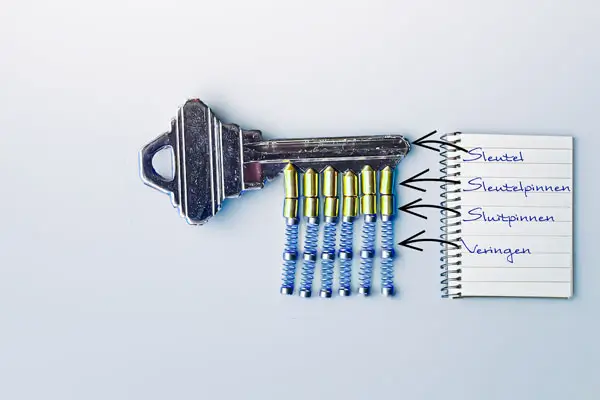
The shape of your key has peaks and valleys in the profile. When the key is inserted into the lock, the pins in the lock are raised one by one to the correct height. Once the pins are at the correct height, the cylinder can be turned to unlock the lock. Using the tension wrench and a hook (or diamond lock pick), you can manipulate almost any lock with SPP, allowing it to be opened without a key.
The MIT Pin Column Model
According to the MIT Guide to Lock Picking, the pin column model emphasizes “the relationship between applied torque and the force needed to lift each pin.” The fundamental algorithm: light tension → find binding pin → lift to shear line → repeat.
The SPP Method in Brief:
- Apply tension with tension wrench
- Find binding pin
- Lift pin to shear line
- Feel/hear the click
- Search for the next binding pin
- Repeat until the lock is open
Why SPP is the Best Lockpick Technique
Lockpicking has many different techniques to open a lock without a key, but SPP is considered by professionals to be the only true lockpick method. In the lockpick sport, this is referred to as Single Pin Picking or SPP. With enough time and practice, you can pick open any lock using the SPP technique.
✅ Universal Application
With enough time and practice, you can literally open any pin tumbler lock with SPP – from simple padlocks to high-security cylinders.
🎯 Precision & Control
You have complete control over each pin, allowing you to effectively tackle security pins such as spools and serrated pins.
📚 Learning Value
SPP forces you to truly understand the mechanics of locks, making you a better all-around lockpicker.
Expert Tip from Ties: Always start with SPP before learning other techniques. It gives you the foundation to better understand and apply all other techniques.
Essential Tools for Single Pin Picking
1. Hook Picks – Your Main Weapon
For the Single Pin Picking technique, various lockpicks can be found, but the most well-known are the hooks and half diamonds. Hooks allow you to apply vertical pressure, while half diamonds are handy for making horizontal movements. I personally love the idea of being able to open almost any lock with the shape of a simple lockpick.

For me, that is the most standard Short Hook – this is sometimes also described as the Feeler Pick. This lockpick is generally found in every lockpick set.
🛒 Recommended Hook Pick Sets for Beginners
Start your SPP journey with professional tools specifically assembled for this technique:
- Complete Hook Pick Set – All essential hooks in one set
- Loose Premium Hook Picks – Assemble your own perfect set
- Short Hook – The industry standard for professionals
- Deep Hook – Perfect for locks with extreme bittings
2. Tension Wrenches – The Underrated Hero
Next, it is the task to apply the right tension to the lock. With the right circular tension, the lock can be picked more easily. This tension is applied using tools that lockpickers often refer to as spanners, tension tools, or tension wrenches.
Generally, it is said that light pressure is best for picking a lock. However, a slightly firmer tension with the wrench also yields a lot of success. This way, I often find the right pins (or drivers) that lock the lock more quickly.
| Type Tension Wrench | Best For | Advantages |
|---|---|---|
| TOK (Top of Keyway) | SPP beginners | Better feedback, more room for pick |
| BOK (Bottom of Keyway) | Standard locks | Stable grip, universally applicable |
| Flat Bars | Euro cylinders | Perfect fit, minimal wobble |
For a good lockpick set, tension wrenches are very important, and I recommend purchasing a set with various tension wrenches. Many different locks require many different approaches. One keyway may be long and wide, while another keyway may be short and narrow. There is not one tension wrench that is good for all keyways.
3. Practice Locks – Train Like a Pro
🔐 Perfect Practice Locks for SPP Training
Start with transparent locks to see the technique, then move on to real challenges:
- Transparent Padlock – See exactly what you are doing
- Sparrows Progressive Locks – Systematically build your skills
- European Cylinders – For repinning and endless practice
4. Vise – Stability is Key
A good vise keeps your lock stable so you can fully concentrate on the technique without having to hold the lock.
The SPP Basic Technique: Step-by-Step Instructions
⏱️ Time needed: 15-30 minutes for first successful pick
Step 1: Place your Tension Wrench
Start by getting a good feel for holding your tension wrench. Place the tension wrench in the keyway (TOK or BOK). Apply
light to moderate pressure
in the direction in which the lock opens.
Step 2: Feel the Pins
By the time you reach this blog, you are probably already quite familiar with lockpicking. Still, I will explain it as if you know nothing. Insert your hook pick into the lock. Go all the way to the back and slowly pull forward while moving over each pin. Feel how many pins there are and how they spring.
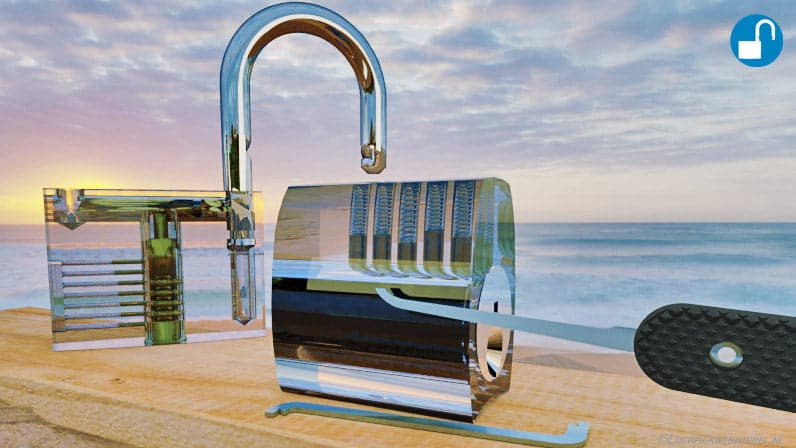
Step 3: Find the Binding Pin
With tension on the tension wrench, test each pin. The pin that
doesn’t spring back easily
and offers resistance is the binding pin. This is your first target. Cheaper locks are harder to read and may feel a bit loose inside. I found that the
better locks
give me much
more feedback
to feel from the pins.
💡 If I want to pick a lock with a short hook, I look for the pin that offers the most resistance. Due to the imperfections of a lock, there is always one pin that can be set just before the others.
Step 4: Place the Pin
In the
single pin pick
we do not attack all the pins at once as we do with the rake, but we will
take one pin at a time
. So a targeted attack with just the tip of your lockpick. Push the binding pin up until you hear a
click
or feel it. The pin is now set on the shear line. The core of the lock will turn slightly.
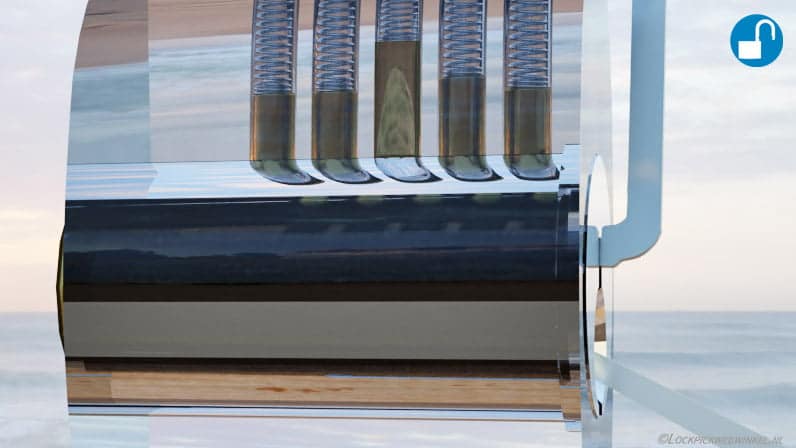
Step 5: Find the Next Binding Pin
Remove your pick from the lock and test all the pins again. Look for the next pin that offers resistance.
Note:
Pins that you have already set will also offer resistance – DO NOT pick these again! Follow the pin you are currently working on;
“Okay, I have set pin 1, nothing on 2, how about 3, small click on 3, nothing on 4…”
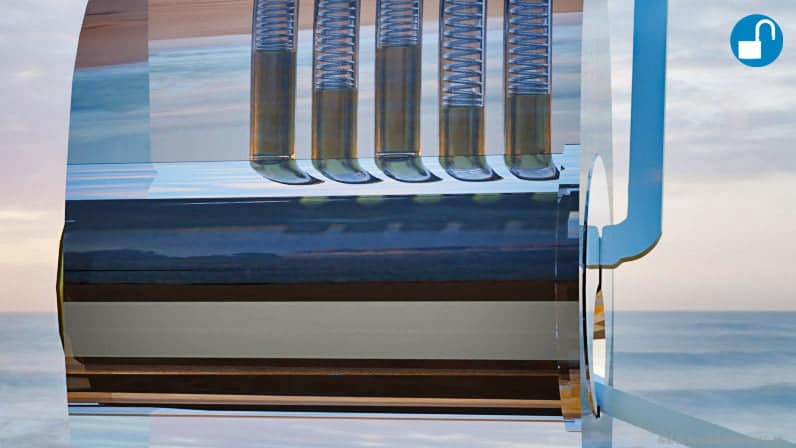
⚠️ Important Warning: If you have picked a pin, you must remember them. An overset results in resetting the lock, and you will have to start over.
Step 6: Repeat Until Open
Keep repeating this process: find binding pin → place pin → check all pins → until all pins are set and the lock opens.



Hybrid Picking Technique: Raking + SPP Combination
The Alternative Approach
Find the best place to apply tension to the lock. Then start with raking and finish with SPP. This methodology is used by top pickers in competitions because it yields faster times than pure SPP while maintaining reliability.
Sequential Attack Strategy
Timing: 15-20 seconds of raking to position multiple pins, followed by targeted SPP for remaining pins.
Pro Tip: The point is not to randomly smash all the pins. The hybrid technique combines the best of both worlds – the speed of raking with the precision of SPP.
Setting Tension: The Biggest Secret of SPP
There are two philosophies you can use with the tension wrench. Both are valid, and you can even use both on the same lock.
Three Levels of Tension
| Level | Description | Application |
|---|---|---|
| Heavy Tension | Enough to slightly bend the tension tool and leave a dent in your fingertip | Diagnostic picking, feeling bidding |
| Medium Tension | Sharp needle feel without skin penetration | Standard picking, most locks |
| Light Tension | Just enough to hold the needle in place | Security pins, overset recovery |
Method 1: Minimal Tension For beginners
This is just enough tension to prevent the pins from falling back down.
✅ Advantages:
- The lock is easy to pick
- Once you get a feel for it, it’s easy to work quickly
- Less chance of breaking picks
- You can still pick anti-lockpick pins
❌ Disadvantages:
- You may drop pins that you have already set
Method 2: Maximum Tension For advanced users
So much tension that you can just barely move the pins, but not more. The pins must still be movable!
✅ Advantages:
- No worries about repositioning pins
- Easy distinction between security pins and normal pins
- Clear feedback when a pin binds or is set
❌ Disadvantages:
- Lockpicks break faster
- False sets require more attention
- Can frustrate beginners
Advanced Tension Control Techniques
Release Picking Method
For recovering over-set pins without a full reset:
- Gradually reduce tension to drop a single over-set pin
- Maintain just enough tension to hold the set pins in place
- Reapply the correct tension after a pin drop
Pulse Tensioning:
Use a
pulsating pressure
with your tension wrench. By occasionally applying more or less tension, you hopefully find the right pressure to set the correct pin. Sometimes you may be working on a pin and set it lower than you initially expected. By slightly reducing the pressure, the pin will spring back to its original position.
Pin Reading & Feedback Interpretation
Success in lock picking is primarily a matter of skill. The pick and tension tool enhance and send feedback about the lock status back to the user.
The Jiggle Test Technique
Pay close attention to what each pin has to say while lock picking. Visually oriented individuals may be able to see what is happening in the lock as you press each pin (before applying tension). This way, you can feel how far apart they are and how many pins there are.
| Pin Status | Jiggle Test Feel | Action |
|---|---|---|
| Unset pins/ Unplaced pins |
Move freely with consistent spring pressure | Not binding – skip |
| Under-set pins/ Too low pins |
Initial free movement, then tight binding higher | More lift needed |
| Set pins/ Placed pins |
Initially wobbly without spring pressure, then spring pressure from driver pin | Correct – do not repick! |
| Over-set pins/ Too high pins |
Empty feel initially, then rigid resistance | Apply release picking |
If you are a listener, pay attention to the sound and feel of the springs and the clicking of the pins. You ultimately need to be able to listen well and visualize.
Binding Order Determination
Manufacturing Tolerance Theory
A lock can have up to 4 different binding orders based on tension type (BOK/TOK) and direction (clockwise/counterclockwise). This is due to microscopic imperfections in production.
Each combination affects how the pins get stuck against the wall of the plug and the housing. This means that with:
-
BOK + clockwise tension binds a certain order of pins,
-
BOK + counterclockwise tension binds another,
-
TOK + clockwise tension binds yet another,
-
TOK + counterclockwise tension binds yet another.
Speed Bump Method
To find the first imperfection, I insert my lockpick through the keyhole against the bottom of the back of the lock, as if there is another pin after the last pin. Then I slowly pull the short hook out of the keyhole, over the pins, and look for the pin that offers the most resistance.
Managing Security Pins
Security Pin Feedback Patterns
| Pin Type | Feedback | Technique |
|---|---|---|
| Spool pins | Significant plug rotation with counter-rotation feedback | Reduce tension, allow controlled counter-rotation |
| Serrated pins | Multiple lighter clicks, grinding sensation at shear line | Light tension with grinding motion recognition |
| Mushroom pins | Delayed counter-rotation, deeper false sets | Work patiently, listen for final click |
| T-pins | Deep false sets without counter-rotation feedback | Mental mapping is crucial |
Counter-Rotation Handling
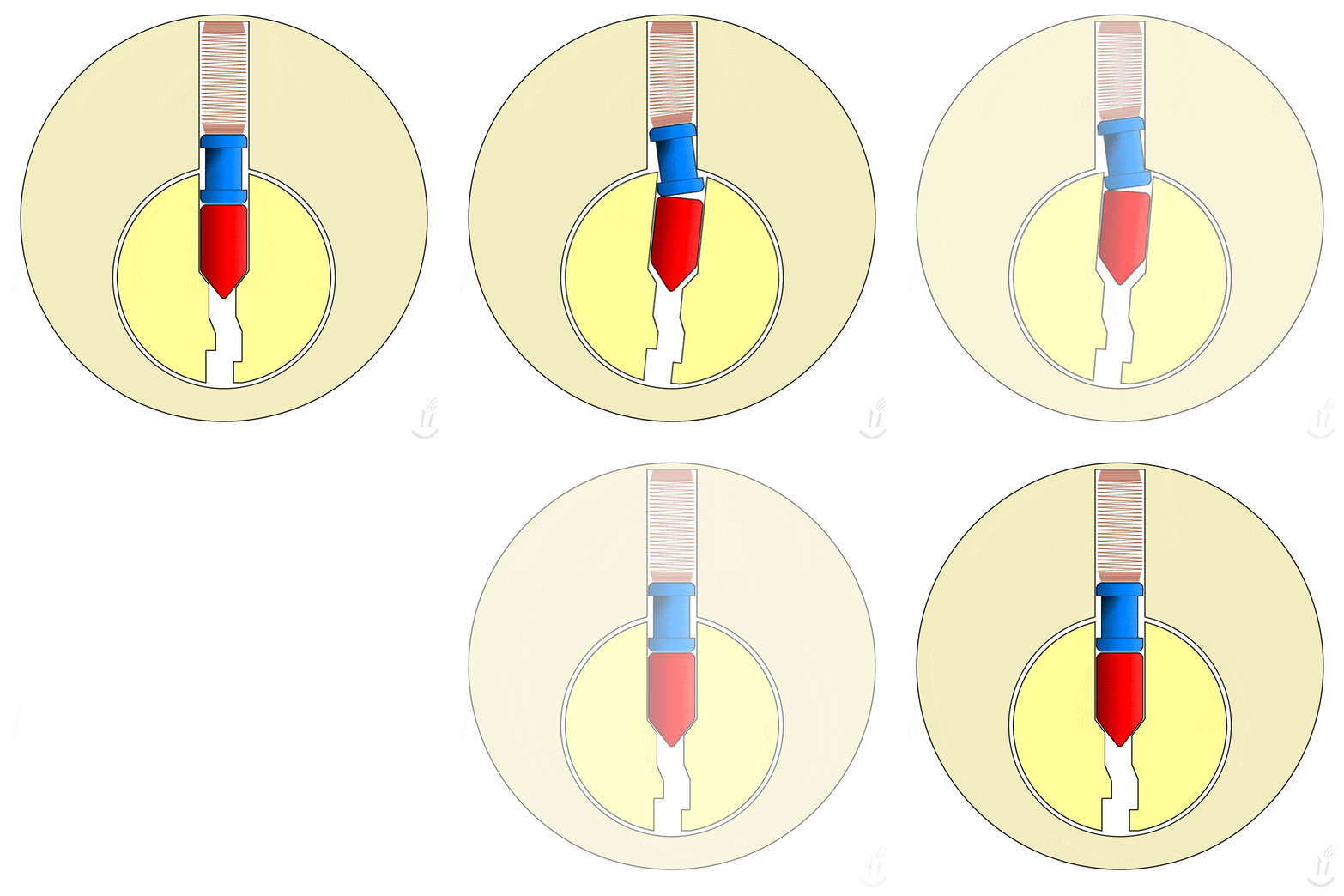
Spool Pin Management
Image by Deviant Olamn – toool.us
When in a false set, you feel your plug counter-rotation (turning opposite to the applied tension). Technique:
- Lightly reduce tension
- Continue lifting pins during counter-rotation
- Listen for the final “click”
- Increase tension again after the set
Deep False Set Navigation
Identification Indicators:
- Significant plug rotation for stopping
- Multiple pins feel “set” but the lock does not open
- Counter-rotation when testing remaining pins
Navigation Process:
- Identify false set by plug rotation
- Test each pin for counter-rotation feedback
- Work only pins with counter-rotation
- Maintain a mental map of real set vs. false set pins
Advanced SPP Techniques from the Experts
1. The Back-to-Front Method
Start picking the lock from front to back (“Okay, I set pin 1, nothing on 2, how about 3…”). Next time, start from the back and work your way forward. This helps you better understand the binding order.
2. Mental Mapping
Keep a mental map of which pins you have picked. This prevents over-setting and makes you more efficient. Also, pay close attention to the pin order. If they bind, they need to be picked.
3. Pin State Recognition
Float Picking Concepts
Float picking is a more advanced lock picking technique that you use to gain very precise control over the rotation of the plug. Normally, a lock with spool pins or “Christmas tree” pins gives you a natural counter-rotation, allowing you to feel that the pin is stuck and work it free. However, with locks that have deep counter-milling, a pin can sometimes get stuck so tightly that you get no counter-rotation at all.
With float picking, you solve this by consciously turning the plug back (counter-rotation) while gently manipulating the pin at the same time. This way, you can get a pin that is “trapped” in the undercut out of the counter-milling and set it correctly. This is especially needed with complex pins like gin spools and Christmas tree pins, and usually only becomes relevant when you are further advanced in lock picking.
4. Zipping vs Controlled SPP
| Technique | Application | Effectiveness |
|---|---|---|
| Zipping | Light tension with quick hook movement | Effective on Master, Schlage – fails on high-security |
| Controlled SPP | Precision control per pin | Universal on all pin tumbler locks |
| Hybrid | Zip to false set, then SPP | Best of both worlds |
5. Schuyler Towne’s DeForest Diamond Technique
“The DeForest diamond is particularly useful against dramatic bittings. When a very short pin is sitting behind a very long pin, the DeForest allows us access where a lot of other picks wouldn’t.”
– From the Course 14 training
6. Expert Pick Movement
It is also wise to keep lockpicking on one type of lock that you enjoy, until it opens consistently. Because you don’t want to fool yourself, I call it “one type of lock.” So not “one lock.” It is not wise to pick just one lock, because then you will remember the order of that specific lock.
Pick Selection for Different Keyways
Keyway Analysis Methodology
| Keyway Type | Pick Choice | Tension Method |
|---|---|---|
| Narrow keyways | Euro shank picks (0.015″) | TOK for maximum space |
| Paracentric | Specialized thin picks | Variable positioning |
| Euro cylinders | Long reach hooks | Flat bars or TOK |
| American locks | Standard hooks (0.025″) | BOK or TOK possible |
Expert Hierarchy: Master one hook shape completely instead of multiple pick types. Use variations in length, width, angles, stiffness of the same base hook design. (Recommendation based on multiple expert sources)
Euro Cylinder Challenges
Specific Approach:
- Curved keyways prevent pick access
- Anti-snap features affect pick placement
- Double cylinder considerations may require TOK tensioning
- Use specialized Euro tension tools
10 Common SPP Mistakes (And How to Avoid Them)
❌ Mistake 1: Too Much Tension
Beginners often apply too much pressure on the tension wrench causing pins to bind.
✅ Solution: Start with minimal tension and gradually build up. Try not to apply too much tension.
❌ Mistake 2: Randomly Attacking Pins
“Hitting all the pins hard” does not work with SPP.
✅ Solution: Work systematically, testing pin by pin. Lockpick first with TOK (Top Of Keyway) tension wrenches to feel everything better.
❌ Mistake 3: Practicing on Only One Lock
You remember the order of that specific lock.
✅ Solution: To remedy this, you could choose to purchase the American 1100 about 10 times. I understand this can be a bit expensive, so you can also just buy a lock that you can repin.
❌ Mistake 4: Picking Pins Again
Picking a set pin again results in over-setting.
✅ Solution: For example, if you have already picked pin number three and then go back into the lock to pick again, pin three will bind again. That’s because it has already been picked! Don’t pick it again or it will result in an over-set.
❌ Mistake 5: Wrong Pick for the Job
Using a hook that is too thick in a narrow keyway.
✅ Solution: Invest in different hook sizes (0.015″, 0.018″, 0.025″). Then see if you can also do BOK (Bottom Of Keyway).
Progressive Practice Schedule for SPP Mastery
It is wise to keep lockpicking on one type of lock that you enjoy, until it opens consistently. Here is a proven progression:
Start with TOK tension for better feedback
Level 1: Transparent Locks
Start here! Visual feedback is invaluable for beginners.
✓ See exactly what each pin does
✓ Understand the mechanics
✓ Perfect first step
Level 2: Progressive Locks
Systematically build your skills with these specially designed training locks.
✓ From 2 to 5 pins
✓ Introduction to security pins (with Sparrows Reload Kit)
✓ Controlled difficulty level
Level 3: Real Locks
Time for the real challenge! Choose from our complete range.
✓ Abus, Master Lock, etc.
✓ Different security levels
✓ Realistic training
Training Tip: Start picking the lock from front to back. The next time you pick the lock, start from the back and work your way forward. You will quickly be able to see and feel how this affects the binding order.
🎯 Recommended SPP Starter Bundle
Everything you need to start SPP today:
- Hook Pick Set – Complete set of hooks
- Tension Wrench Set – All necessary wrenches
- Transparent Padlock – For visual learning
- Vise – For stable practice
SPP Troubleshooting Guide
🔧 “I don’t feel any binding pins”
- Increase tension very lightly
- Check if you are using the correct turning direction
- Try TOK instead of BOK tension
- Apply the Speed Bump Method to find binding order
🔧 “Pins keep falling back”
- Need more constant tension
- Check for worn springs in old locks
- Possible security pins – learn to recognize false sets
- Use pulse tensioning technique
🔧 “Lock gets stuck halfway”
- Probably an over-set pin
- Gradually reduce tension (release picking)
- Listen for pins that fall back
- Start again with less tension
- Check for deep false set
🔧 “I hear/feel counter-rotation”
- Congratulations! You have found a security pin
- Reduce tension lightly
- Keep lifting the pin during counter-rotation
- Wait for the final click
Video Tutorials: See SPP in Action
Basic SPP Technique Demonstration
Perhaps this video can help you further. It perfectly shows how to apply the SPP technique on different locks:
Study Tip: Watch the video first without sound to focus on the hand movements. Then watch with sound for the auditory feedback from the pins.
Frequently Asked Questions about Single Pin Picking
How long does it take to learn SPP?
Most people can open their first lock within 1-2 weeks of daily practice (15-30 minutes). Developing true skill takes 3-6 months, and mastery takes years. But the great thing is: your first successful pick can happen within an hour with the right instructions!
Which hook pick is best for beginners?
Start with a medium hook in 0.025″ thickness. This is strong enough for beginners who are still developing their touch, but thin enough for most locks. The Short Hook or Deep Hook are excellent choices.
BOK or TOK tension – which is better for SPP?
Start with TOK (Top of Keyway) tension. This provides better feedback and more room for your pick to maneuver. Once comfortable with TOK, also practice with BOK for complete versatility. According to TOOOL, locks can have up to 4 different binding orders depending on your tension choice!
Why is SPP better than raking?
SPP gives you complete control and works on all locks, including those with security pins. Raking is faster but only works on simple locks. SPP is the technique that professionals use for serious lockpicking. The hybrid approach (raking followed by SPP) combines the best of both worlds.
Do I really need to invest in transparent locks?
Absolutely! A transparent lock shortens your learning curve by at least 50%. The visual aspect helps you understand what’s happening, which is invaluable for beginners.
How do I prevent my picks from breaking?
Never use excessive force. If a pin isn’t moving, it’s likely not a binding pin. Also: invest in quality picks made of hardened steel. Cheap picks break much faster. Quality picks are worth the investment.
What is the Jiggle Test?
A diagnostic technique where you move each pin up and down to determine their status. Freely moving pins are unset, resistance-providing pins are binding, and pins without spring pressure may already be set.
What is a false set?
A false set occurs when security pins (especially spool pins) cause the core to rotate without the lock opening. This feels like success but requires further manipulation with reduced tension to set the pins correctly.
Your Path to SPP Mastery
Single Pin Picking is and remains the gold standard in the lockpicking world. It requires patience and practice, but the satisfaction of opening your first lock with pure technique is unmatched. Modern SPP is a sophisticated discipline that requires systematic feedback interpretation, dynamic tension control, and specialized recovery techniques.
Single Pin Picking is and remains a challenging topic, but I’m happy to answer any questions you may have. If I find something else I’d like to share about this, I will certainly try to add it to this post. I enjoy finding all sorts of tricks to open a lock faster. For me, locks are a kind of puzzle that, once you’ve opened them, become a little easier each time.
✨ Your SPP Action Plan:
- Start with the right tools – Invest in quality picks and tension wrenches
- Begin visually – Use transparent locks to understand the mechanics
- Practice daily – Even 15 minutes a day makes a big difference
- Experiment with techniques – Try hybrid picking, variable tension, and the Jiggle Test
- Keep challenging yourself – Upgrade to harder locks as soon as you have consistent success
- Join the community – Learn from TOOOL, forums, and other lockpickers
We hope you find this useful. If you have any questions, don’t hesitate to ask. Good luck with lockpicking!
🚀 Ready to Start with SPP?
Discover our specially curated SPP starter sets and begin your journey to lockpicking mastery today!

More Lockpicking Blogs
Want to learn lockpicking? With the right lockpick set and our guides, you can open your first lock within just a few hours. Whether you choose a beginner lockpicking set or professional lockpick tools, our articles will teach you all the techniques step by step.
How Does Lockpicking Work? English Lockpick Beginner Guide
Curious about how lockpicking works? This beginner's guide explains the basics of pin cylinder locks, how pins and the cylinder work together, and what techniques lockpickers use to open...

Why is lockpicking so popular?
Lockpicking has evolved into a popular sport where you challenge yourself with locks. Discover why more and more people are taking up lockpicking, what the main principles are, and...

Rock’A Lock’A BANG BANG!
Sparrows is organizing the unique lockpick event ROCK'A LOCK'A BANG BANG 2024 in a real prison in Canada. Read all about the intensive training, exciting activities like breaching and...
Why You Should Learn Lockpicking Now
Lockpicking has an undeserved negative image, but is primarily a valuable and fascinating skill. Discover how it helps you better understand your own security, how it provides solutions in...