
-
Your shopping cart is empty
Go to the shop to add products to your cart
How to Crack Padlock Combination
Forgot the combination to your combination lock? In this guide, you will learn two proven methods to crack a combination lock: the rope method for a quick grip and the decoder technique to find out the exact combination. Step by step, we explain how you can retrieve your forgotten code in just a few minutes, including frequently asked questions about resetting combination locks and TSA locks.
Author: Ties
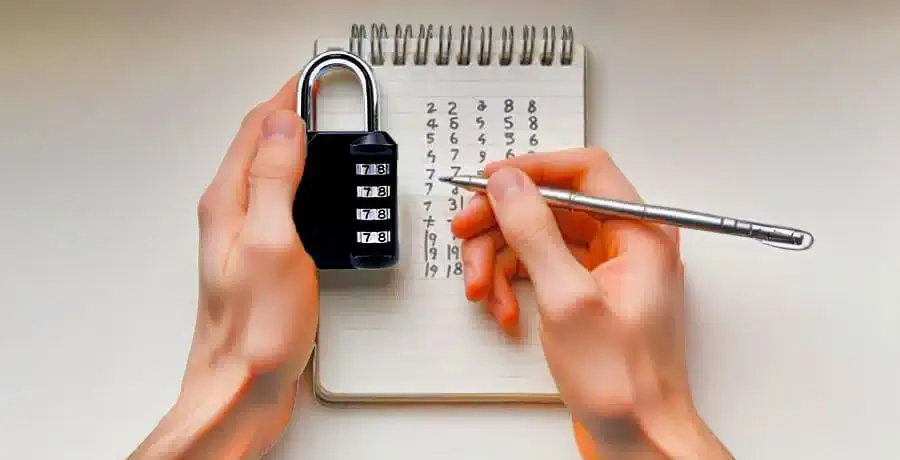
This guide shows you how to crack the code of any combination lock in just seconds! This skill should only be used legally, and I am only responsible for teaching you how to unlock your own combination locks if you’ve forgotten the code.
Step 1: EXPLANATION OF HOW IT WORKS
A combination lock typically has three or more dials with a keyhole in the center. By entering the correct combination (e.g., 3-3-3-3), the keyholes on all dials align, allowing the lock to open.
When cracking a number lock, you can use a piece of rope to create a makeshift grip. This provides a better hold on the lock, which is essential. To crack the lock, you need to apply consistent upward pressure on the shackle, which can be difficult with bare hands.
To unlock your combination padlock, all you need is about 30 cm of string or rope and the lock you want to crack.
The ability to apply consistent pressure to the shackle is crucial. This increases friction on the dials, causing each one to make a distinct click and move slightly upwards when turned to the correct number.
When you feel the shackle move slightly and hear a click, move on to the next dial and repeat the process until all the dials are aligned and the lock opens. If the lock is attached to a fixed object like a gate or door, you might not need the rope because the fixed object provides better control and grip, allowing you to crack the lock with just your hands.
Step 3: FINDING THE RIGHT COMBINATION
First, thread the rope through the loop of the lock and fold it around the shackle, as shown in the first image. This will serve as your makeshift grip, giving you a firmer hold on the lock to ease the process.
Next, grip the rope firmly in your hands and apply as much pressure as possible on the top of the lock with your thumb. Make sure to maintain consistent pressure throughout the process. While maintaining this pressure, gently turn each dial in both directions. You will quickly identify the dial that is hardest to turn — this is where you start (in my case, it was ‘D’).
Step 4: CRACKING THE CODE
Begin turning the dial gradually until you hear a distinct click and feel the shackle move slightly upwards. Note the number at which the click occurs, then turn the dial again to double-check. If it clicks on the same number repeatedly (in my case, ‘D’ clicked at ‘3’), you’ve successfully found the first number of the code. Move on to the next dial, and repeat the process (my next was ‘C’).
Continue turning each remaining dial in the same way until you have found all the numbers of the combination. For the final dial, keep applying consistent pressure and rotate it slowly through a full turn until the shackle opens.
Step 5: CONGRATULATIONS!

More Lockpicking Blogs
Want to learn lockpicking? With the right lockpick set and our guides, you can open your first lock within just a few hours. Whether you choose a beginner lockpicking set or professional lockpick tools, our articles will teach you all the techniques step by step.
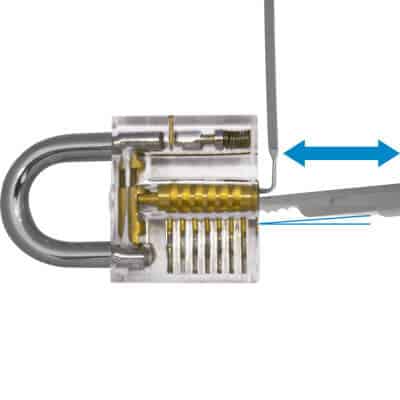
Learn Lockpicking – Raking a Lock
Raking and rocking are two of the fastest lockpick techniques to open a lock without needing to feel the exact feedback of single pin picking. In this article, I...
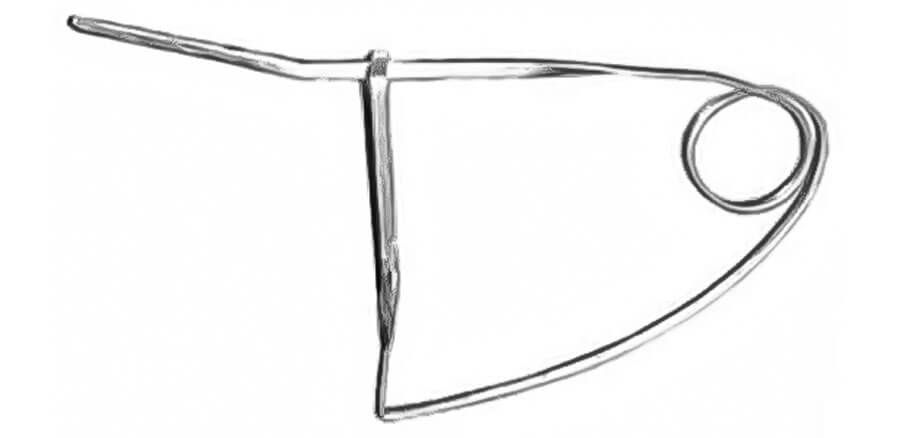
How to Make a Manual Lock Pick Gun (Snap Gun)
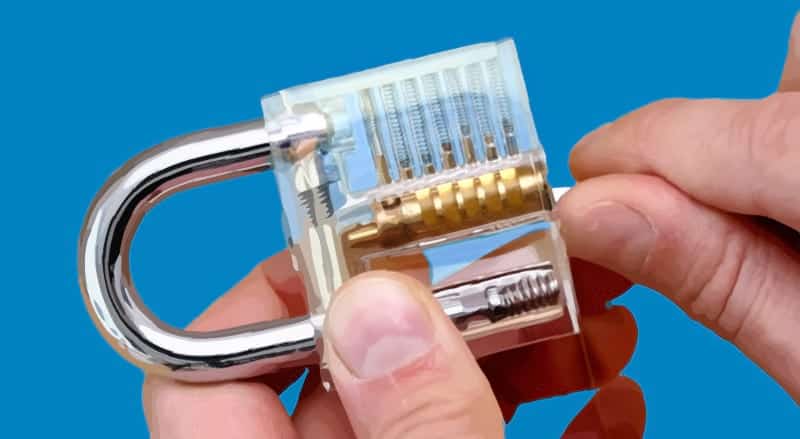
How can you improve in lockpicking?
Do you want to become faster and better at lockpicking? With these 6 practical tips, you'll learn why you should vary between locks, how to prevent frustration, why regular...
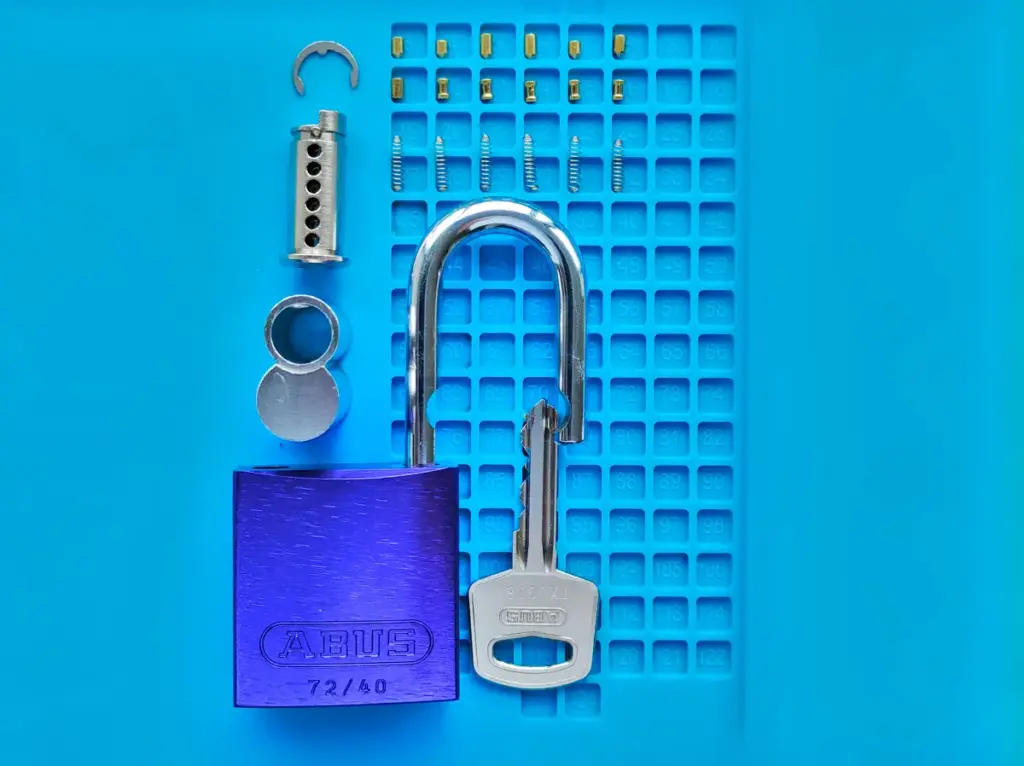
Lock Picking Tips and Techniques – Abus Padlock
Discover how to lockpick the challenging ABUS 72/40 with step-by-step tips on raking, single pin picking, and using the right tension wrench. Also learn about the marking technique and...