
-
Je winkelmandje is leeg
Ga naar de shop om producten in je winkelwagen te plaatsen
The Unpickable Lock
Are there locks that really can't be picked? We examine the latest attempt by YouTuber Works By Design, along with previous attempts by Stuff Made Here and Andy Pugh. You'll learn how these unpickable locks work, which weaknesses lockpickers have already discovered, and why the SKG certification still offers the best protection for most homes.
Author: Ties
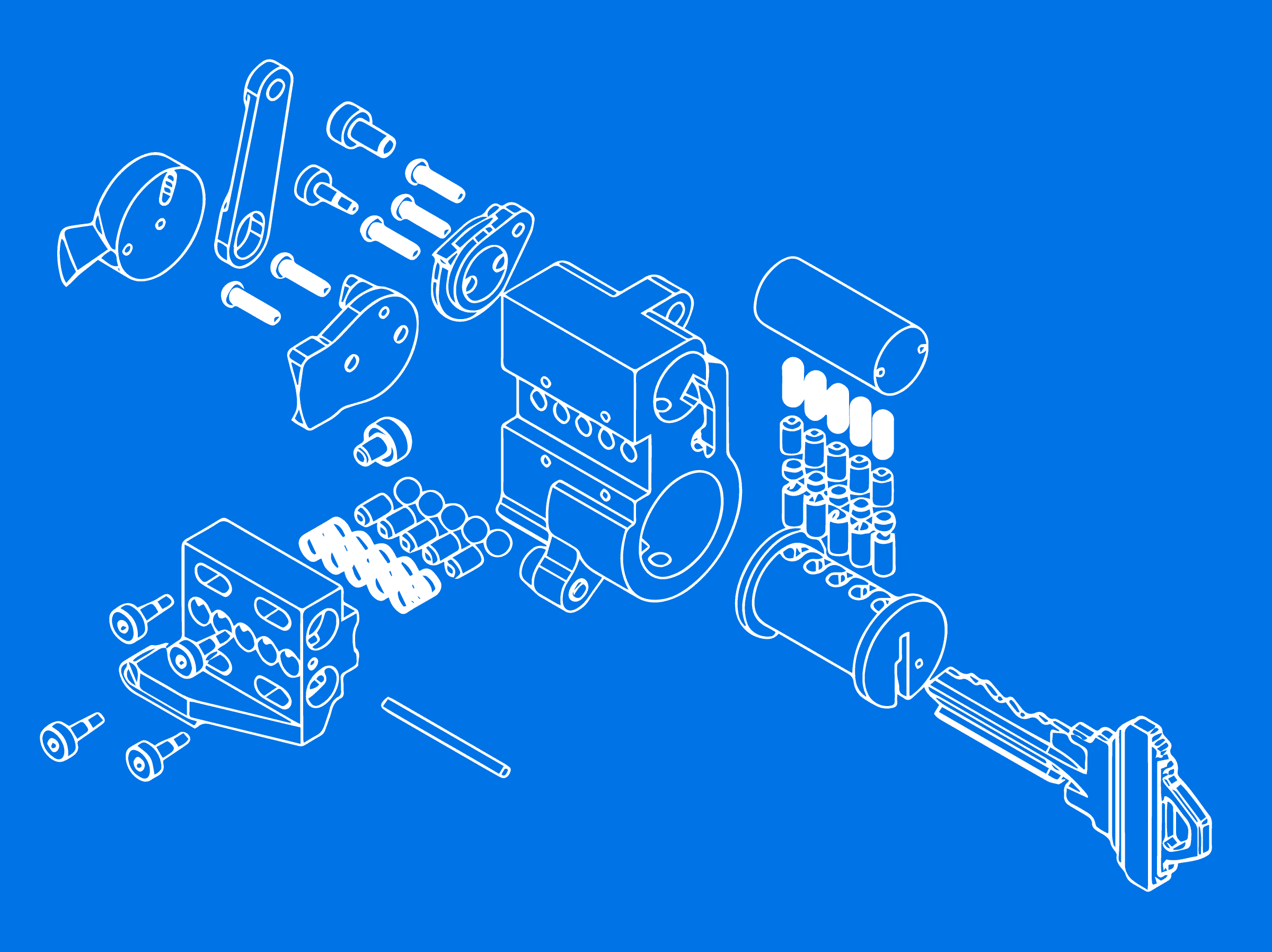
Update April 2026: YouTuber Works By Design has built a new unpickable lock that has been viewed over 3 million times in four days. The lock has now been sent to LockNoob and the community of Lockpickers United. We have updated this article with an analysis of its design.
Are there locks that cannot be picked? The short answer is no. People have gone to extraordinary lengths to secure things, and lockpickers have gone just as far to unlock them. If you can open a lock the right way, you can also open it the wrong way.
But that doesn’t mean no one is trying. In fact, in recent years, there have been increasingly serious attempts to build a lock that is truly unpickable. Below, we look at the most notable attempts and what they teach us about lockpicking.
Works By Design: the most pickproof lock so far (2026)
In April 2026, YouTuber Works By Design published a video about his third attempt to build an unpickable lock. His previous two attempts were both picked. This time, he chose a radically different approach, and the result is fascinating.
How does this lock work?
The core idea is simple yet clever. In a regular lock, the keyhole is always in the same place, and you can access it with hook picks and tension wrenches. Works By Design shifts the keyhole to the side of the core. When you turn the core, the keyhole disappears behind the casing of the lock. There is literally a wall between your picks and the pins.
The procedure to open the lock works like this. You insert the key into the keyhole. You turn the core a full rotation, causing the key to disappear behind the wall and test the pins. If the key is correct, all the pins are at the right height, and the core can turn further.
What makes this design so strong is that it does not rely on secrecy. Works By Design shows exactly how everything works in the video. Even with that knowledge, you cannot get in because you simply cannot achieve anything with your tools once the core is turned. That is a fundamentally different approach than “security through obscurity,” which many lock designs lean on.
The magnetic key
The key for this lock is just as special as the lock itself. Because the entire key must disappear into the lock, there can be no keychain attached. Works By Design solved this with a magnetic handle that you can turn on and off. It works on the same principle as a magnetic indicator holder. A cylindrical magnet rotates in a steel casing. In one position, the magnetic field is trapped in the steel. In the other position, the field flows out and holds the key.
It’s a clever system. But the magnet is still quite weak in the current version. On the lockpicking subreddit, it was suggested that a stronger external magnet might be able to operate the key from a distance without needing the original key. Works By Design is working on a stronger version for a future revision.
The lockout pin against bumping
Picking is not the only way to open a lock non-destructively. Bumping and rapping are techniques where you strike the lock while applying tension to the core. With enough luck, all the pins jump above the shear line at once.
Works By Design came up with the lockout pin for this. This is a small pin that sits opposite the key pins and is normally held in place by a spring. As soon as the lock vibrates or moves too much, the pin shifts due to its own mass to a magnet in the core. That magnet pulls the pin into a cavity, preventing the core from turning. The only way to reset it is to turn the core all the way back to the starting position.
On the lockpicking subreddit, it was suggested that an external magnet might influence the lockout pin. But that magnet would have to work through the stainless steel casing. Whether that works in practice is still a question.
Impressioning as a possible weakness
Lockpicker Artichoke2000 from Lockpickers United pointed out an attack vector that Works By Design almost overlooked. Impressioning is a technique where you insert an unworked key blank into the lock, apply tension, and move the blank back and forth. The pin that binds first leaves a small dent on the brass. You file that dent away and repeat the process until you have a working key.
As a solution, Works By Design replaced one of the pins with a plastic version. A plastic pin does not leave visible markings on a brass blank. However, experienced lockpickers noted on Reddit that a plastic pin wears out faster than a metal pin. You could also soot the blank, which would leave traces even with a plastic pin.
It is still unclear whether impressioning even works with this design. The core rotates in the pins instead of the pins pressing down into the core, making the process unpredictable.
Who will test it?
Works By Design has sent copies of the lock to LockNoob and to members of the Lockpickers United community. LockNoob has also received key blanks, indicating that he will likely try impressioning. Once his video is released, we will update this article with the results.
A local locksmith in San Francisco was unable to open the lock at all. His conclusion was sober and honest. You cannot pick what you cannot access.
Stuff Made Here: two attempts, picked both times
Before Works By Design made his attempt, Shane from the YouTube channel Stuff Made Here was the most well-known builder of unpickable locks. He designed two versions that prevent you from testing the pins one by one. In theory, this made Single Pin Picking impossible.
Despite the complexity of his design, the LockPickingLawyer managed to open both versions. He lifted the pins to their maximum height, locked them, and rotated until they fell into the correct position. It took several attempts, but the method proved reliable.
The difference with the Works By Design lock is clear. Stuff Made Here tried to make picking harder by making the mechanism more complex. Works By Design makes picking impossible by physically blocking access to the mechanism. That is a fundamentally different approach.
The Co-Axial lock by Andy Pugh
Another interesting attempt is the Co-Axial Lock by Andy Pugh, which was tested by LockNoob. This lock uses multiple false shear lines. Where a normal lock has one line where the pins must be, this lock has several. Only the correct combination of the right shear line per pin opens the lock.
LockNoob demonstrated how difficult it was to find the correct shear line. The lock is extremely hard to pick. But it still has an accessible keyhole, meaning you can, in principle, access it with tools.
Locks with SKG certification
In the Netherlands, you do not need to buy an experimental prototype for good security. The SKG certification from the Foundation for Quality Facade Construction indicates how burglary-resistant a lock is. The more stars, the better the protection. A lock with three stars has been tested for durability, resistance to manipulation, and resistance to destructive attacks.

For most home situations, a lock with two or three SKG stars is more than sufficient. Burglars rarely use lockpicks in practice. They opt for speed and use destructive methods or look for an easier target.
Are there unpickable locks?
After all the attempts by Stuff Made Here, Andy Pugh, and now Works By Design, the honest answer is that we still don’t know for the latest design. The Works By Design lock is the first to physically block access to the mechanism instead of making the mechanism itself more complex. This is a fundamental shift in approach.
But the lockpicking community is already working on it. The locks have been shipped. LockNoob has key blanks. And on Reddit, the possible attack vectors are already being extensively discussed. Whether the lock will ultimately hold up remains to be seen.
What we do know for sure is that the paradox of every lock remains. It must protect while also providing access. A lock that cannot be opened by anyone is also not openable by the owner. This makes designing a truly unpickable lock not only a technical problem but also a philosophical question.
Do you want to learn how pins, shear lines, and tension work? Start with a transparent practice lock and a beginner lockpick set. This way, you can see for yourself what the Works By Design lock is trying to prevent.

More Lockpicking Blogs
Want to learn lockpicking? With the right lockpick set and our guides, you can open your first lock within just a few hours. Whether you choose a beginner lockpicking set or professional lockpick tools, our articles will teach you all the techniques step by step.
Opening car locks with Lishi 2-in-1 lockpick and more! (2025 Update)
A complete guide to opening car locks with the Lishi 2-in-1 lockpick and decoder. You will learn how this tool works, how to decode a car lock in minutes,...
Cracking a Combination Lock – Easy and Simple Opening
Forgot your combination lock code? In this guide, you'll learn two proven methods to crack a combination lock: the rope method for quick grip and the decoder technique to...
The Marking Technique – Lockpicking for Beginners
Learn how to mark your lockpick with a simple marker to learn lockpicking faster. This life hack gives you visual reference points, so you know exactly how deep to...
How Do I Open a Mailbox? Dutch Mailbox Locks
Mailbox blocked or lost key? Dutch mailboxes primarily use wafer locks and pin tumbler locks. In this article, we explain how these locks work, what the differences in security...