
-
Je winkelmandje is leeg
Ga naar de shop om producten in je winkelwagen te plaatsen
How does a Lockpick Gun work?
A lockpick gun (snap gun) uses kinetic energy to separate the pins in a cylinder lock, similar to the Newton's cradle principle. In this article, I explain the physics behind the technique, compare manual and electric models, and provide a step-by-step guide to opening your first lock, including maintenance tips and troubleshooting.
Author: Ties
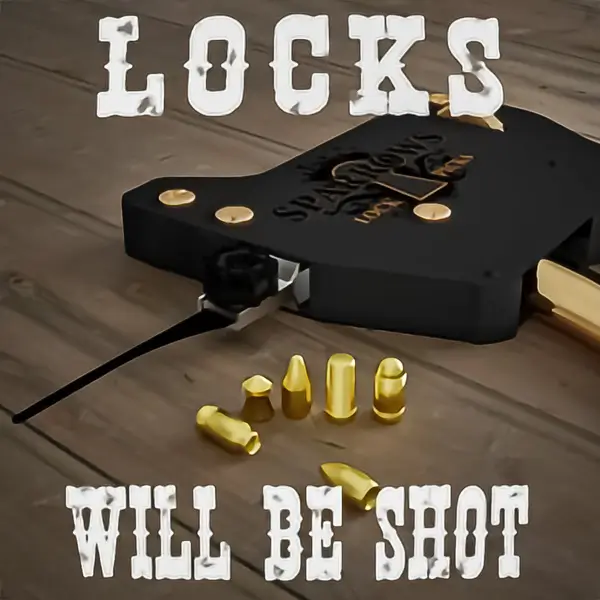
What is a Lockpick Gun? The Newton’s Cradle of Lockpicking
A lockpick gun, also known as a snap gun, is a specialized tool that uses kinetic energy to open locks without a key. In my years at Lockpickings, I have seen how this fascinating tool has evolved from a simple mechanical device to advanced electric precision instruments.
Interesting fact: The first lockpick gun was patented in 1934 by Ely Epstein in the United States. The original design used a spring mechanism that surprisingly resembles modern manual models like the Sparrows Double Tap that we sell.
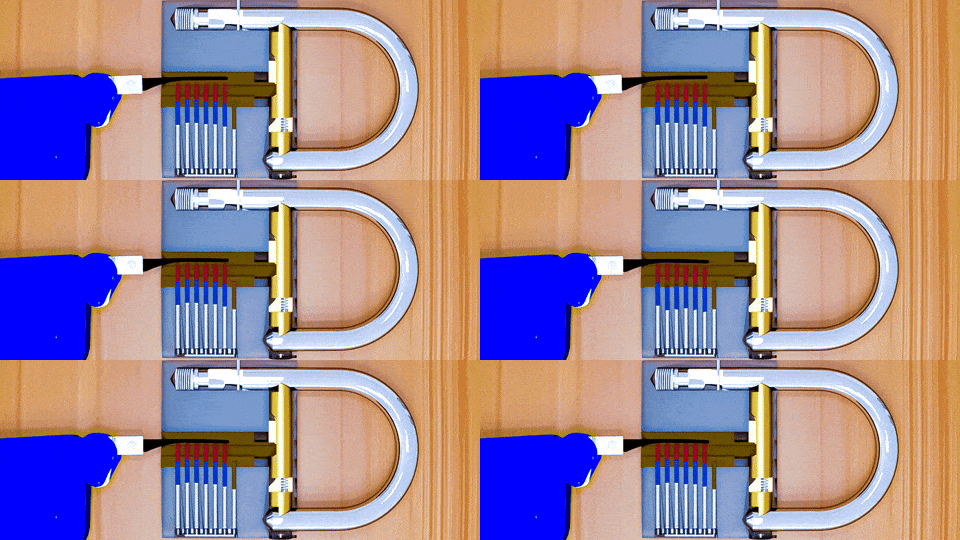
The operating principle is elegant in its simplicity but fascinating in its physical complexity. Imagine a Newton’s cradle – that classic desk decoration with metal balls transferring energy. A lockpick gun works on the same principle of momentum transfer, but applied to the pins in a cylinder lock.
The Technical Definition
A lockpick gun is an instrument that generates rapid, controlled impulses to separate the driver pins in a pin tumbler lock from the key pins. This separation occurs by a needle striking the bottom of all the pins simultaneously at high speed, creating a chain reaction of energy transfer.
The Physics Formula
Kinetic Energy: KE = ½mv²
Momentum Conservation: p = mv
Elastic Collision: m₁v₁ + m₂v₂ = m₁v₁’ + m₂v₂’
Where m = mass, v = velocity, p = momentum
The Physics Behind the Snap Gun Technique
Let’s dive deeper into the fascinating physics. When I first used a lockpick gun, I didn’t understand why it worked. After years of experimentation and discussions with experts at TOOOL Netherlands, I can now explain the complete science to you.
The Newton’s Cradle Effect in Detail
When the needle of a lockpick gun strikes the bottom pin (key pin), something special happens:
- Impact Moment (0-10 microseconds): The needle strikes the bottom pin with a force of 1-10 Joules
- Energy Transfer (10-50 microseconds): The kinetic energy is transferred according to the law of conservation of momentum
- Pin Separation (50-100 microseconds): The driver pin shoots up while the bottom pin remains relatively still
- Critical Window (100-500 microseconds): This is your chance! The pins are separated and you can turn the lock
Pro Tip from Ties: Most beginners miss the critical window because they react too slowly. Train yourself to apply tension immediately as soon as you feel the “click”. With our Multipick Kronos, you have more chances per second due to the 13,000 RPM, making it easier.
Why Security Pins Are a Challenge
Security pins like spool pins and serrated pins disrupt the energy transfer. Their irregular shape causes:
- Energy dissipation: Up to 40% of the energy is lost
- False sets: The pins get stuck in incorrect positions
- Rotation resistance: Extra resistance to turning
Types of Lockpick Guns: Complete Comparison
In my time at Lockpickings, I have tested dozens of models. Here is my complete comparison:
Manual Lockpick Guns
| Model | Price Range | Impact Power | Suitable For | Learning Curve |
|---|---|---|---|---|
| Sparrows Double Tap | €45-55 | Adjustable 1-8 Joules | Beginners & Professionals | Average |
| Brockhage BPG | €75-95 | Precision 2-10 Joules | Professionals | Steep |
| KLOM Manual | €25-35 | Basic 1-5 Joules | Budget Beginners | Easy |
Electric Lockpick Guns (EPG)
| Model | RPM | Battery | Needle Deflection | Best Feature |
|---|---|---|---|---|
| Multipick Kronos | 13,000 | 2900mAh Li-ion (2.5 hours) | 1-4mm adjustable | German precision engineering |
| KLOM Electric | 9,500 | 1500mAh (1 hour) | 2-6mm fixed | Best price-quality |
| Southord EPG | 11,000 | 2200mAh (2 hours) | 2-5mm adjustable | American reliability |
Dutch Legislation & Responsible Use
As a Dutch web shop, we find it important to be transparent about the legal aspects. In the Netherlands, lockpick guns are legal to own and use, but there are important rules:
Legal Framework (Art. 192 Sr.)
Legal: Possession and use on your own locks or with explicit permission from the owner
Illegal: Use on someone else’s property without permission (burglary tool)
Gray area: Carrying it without a good reason can be seen as suspicious
TOOOL Netherlands Ethical Guidelines
As a supporter of TOOOL (The Open Organisation of Lockpickers) Netherlands, we follow their ethical guidelines:
- Only your own locks: Only practice on locks that you own
- No locks in use: Never pick locks that are in use
- Transparency: Be open about your hobby
- Education focus: It’s about knowledge, not access
Step-by-Step: Opening Your First Lock
Time required:
5-15 minutes for first success
Requirements:
- Lockpick gun (manual or electric)
- Tension wrench or tension wheel
- Transparent practice lock (recommended for beginners)
- Lubricant (graphite or WD-40)
- Preparing the lock: Start with a clean, lubricated lock. Old locks with rust or dirt are much harder. Spray a small amount of graphite powder into the keyhole. This reduces friction by 30-40%.
- Set your lockpick gun: For manual guns: start with minimal impact power (about 2-3 on the scale). For electric guns: start with low speed (50% power). Hitting too hard can damage the pins and make it harder.
- Position the tension wrench correctly: This is crucial! Use about 1-2 Newtons of tension (the weight of a coin). Too much tension blocks the pins, too little lets them fall back.
- Position the needle: Slide the needle fully into the lock, lift it slightly (1-2mm) so it hovers just above the pins. The needle must be able to strike all the pins at once.
- The trigger technique: Manual: Squeeze quickly but controlled. Electric: Short bursts of 0.5-1 second. Feel for feedback – a “softer” feeling means the pins are moving.
- Turn at the right moment: As soon as you feel the resistance drop (usually after 3-10 attempts), turn immediately with your tension wrench. You only have 50-100 milliseconds!
Which Lockpick Gun Suits You?
After advising hundreds of customers, I have developed a system to find the perfect match:
For Absolute Beginners
My recommendation: KLOM Manual Gun
- Affordable (€25-35) – perfect to test if this hobby is for you
- Simple mechanism – less that can break
- Gives a feel for the technique
- Upgrade later to electric if you’re enthusiastic
For Serious Hobbyists
My recommendation: Multipick Kronos EPG
- German quality – lasts for years with intensive use
- 13,000 RPM provides maximum effectiveness
- Adjustable needle deflection for different locks
- Professional features like quick-change needles
For Professionals
Professional locksmiths often have both: an electric for speed and a manual for precision.
- Primary: Multipick Kronos EPG for daily use
- Backup: Sparrows Double Tap for difficult situations
Expert Tips from 10 Years of Experience
The “Pulse Technique” for Security Pins
For locks with security pins, I use what I call the “pulse technique”: give 3 quick pulses with minimal tension, increase tension to 50% for 1 pulse, back to minimal tension for 2 pulses, and turn when feeling movement. This technique works in 70% of cases with spool pins!
The Secret of the Right Needle
Not all needles are the same:
- 0.5mm needles: For European precision locks
- 0.6mm standard: General use
- 0.8mm heavy duty: For American locks with heavy pins
- Bent needles: For locks with paracentric keyways
The “Dutch Lock Challenge”
Dutch locks like NEMEF and DOM are notoriously difficult:
- NEMEF: Use light tension (1 Newton max) and short bursts
- DOM: Often have these sidebar – lockpick gun does not always work
- IKON: Watch out for the tight tolerances – use 0.5mm needle
Troubleshooting: Why Isn’t My Lockpick Gun Working?
Problem 1: “The pins aren’t moving”
Causes:
Too much tension on the tension wrench (90% of cases!), needle not hitting pins properly, impact force set too low.
Solution:
Start over with MUCH less tension.
Problem 2: “Pins are jumping but the lock won’t turn”
Causes:
You’re missing the critical timing window, security pins cause false set, one or more pins overset.
Solution:
Train your timing with a transparent practice lock so you can see what’s happening.
Problem 3: “Needle keeps breaking”
Causes:
Impact force too high, cheap needles, wrong angle in the lock.
Solution:
Invest in quality replacement needles.
Maintenance & Extending Lifespan
A well-maintained lockpick gun lasts for years. My Brockhage from 2016 still works perfectly!
Weekly Maintenance
- Clean the needle: Remove metal particles with isopropyl alcohol
- Check needle straightness: Roll on a flat surface
- Lubricate moving parts: One drop of machine oil
Monthly Maintenance
- Disassemble if possible: Clean internal parts
- Check spring tension: Replace weakened springs
- Battery maintenance (EPG): Fully discharge and recharge
When to Replace?
Signs that your lockpick gun needs replacing: inconsistent impact force despite maintenance, metal fatigue in the frame, motor runs irregularly (EPG), more than 50% reduced battery life (EPG).
Dutch Lockpick Community & Events
The Dutch lockpick scene is one of the most active in the world!
TOOOL Netherlands
The Open Organisation of Lockpickers holds regular meetings in various cities: Amsterdam (every first Tuesday), Eindhoven (bi-weekly on Thursday), The Hague (monthly weekend meetup).
LockCon International
The annual LockCon event (usually in October) is a must-visit, but it’s only for the best lockpickers!
Online Communities
- Reddit r/lockpicking: International community (300k+ members)
- Discord LockPickers United: Real-time chat and advice
- Dutch Facebook groups: Local events and trading
Frequently Asked Questions (Complete FAQ)
How does a lockpick gun work?
A lockpick gun works according to the Newton’s cradle principle. The needle strikes the bottom pins, transferring kinetic energy to the driver pins. These shoot up and create a temporary moment (50-100 milliseconds) in which the lock can turn.
Is a lockpick gun legal in the Netherlands?
Yes, in the Netherlands, lockpick guns are legal to own and use on your own locks or with explicit permission from the owner. Using them on someone else’s property without permission is punishable under Article 192 Sr.
Which lockpick gun is best for beginners?
For beginners, I recommend the KLOM manual lockpick gun (€25-35) to learn the technique. If you want to go straight for quality, the Multipick Kronos is the best long-term investment.
What is the difference between a manual and electric lockpick gun?
Manual guns give you more control over force and timing (1-10 strikes per second), while electric guns work faster (150-220 strikes per second) but provide less tactile feedback.
Why isn’t my lockpick gun working on my lock?
The most common cause (90% of cases) is too much tension on the tension wrench. Other causes: security pins, sidebar mechanisms, or incorrect needle thickness.
How much does a good lockpick gun cost?
Budget models start at €25 (KLOM), mid-range €45-75 (Sparrows, Brockhage), and professional electric models €150-350 (Multipick Kronos).
Can a lockpick gun open all locks?
No, lockpick guns only work on pin tumbler locks without special security. They do NOT work on disc detainer locks, wafer locks with sidebar, electronic locks, or high-security locks with special pins.
How long does it take to learn to use a lockpick gun?
With a good practice lock and instructions, you can open your first lock within 1-2 hours. To become consistent usually takes 10-20 hours of practice.
Can I take lockpick guns on the plane?
No, lockpick guns are prohibited in both carry-on and checked luggage by most airlines. Ship them ahead or buy on-site if you’re going abroad.

More Lockpicking Blogs
Want to learn lockpicking? With the right lockpick set and our guides, you can open your first lock within just a few hours. Whether you choose a beginner lockpicking set or professional lockpick tools, our articles will teach you all the techniques step by step.
The real costs of a locksmith in 2026
What does a locksmith really cost in 2026? In this article, we discuss the fair rates for opening a closed door, how to recognize fraudulent locksmiths by warning signs,...
Lockpicker uses can to initiate lawsuit
A remarkable lawsuit in the lockpicking world: McNally opened a high-security padlock from Proven Industries with nothing more than a soda can. The company filed a lawsuit but lost....
Lockpick Gift Guide Christmas 2025: The Best Gifts for Hobbyists
Looking for the perfect Christmas gift for a lockpick enthusiast? In this guide, I discuss the best lockpick sets and practice locks for both beginners and advanced hobbyists, including...
Opening a €500 Lock with a Tie Wrap
A simple tie wrap proves enough to open the Schlage CO-100, a lock costing around €500, in seconds. Discover how this surprising bypass technique works, how manufacturer Allegion responded...