
-
Je winkelmandje is leeg
Ga naar de shop om producten in je winkelwagen te plaatsen
GrimGo Lockpick Set: First Feedback
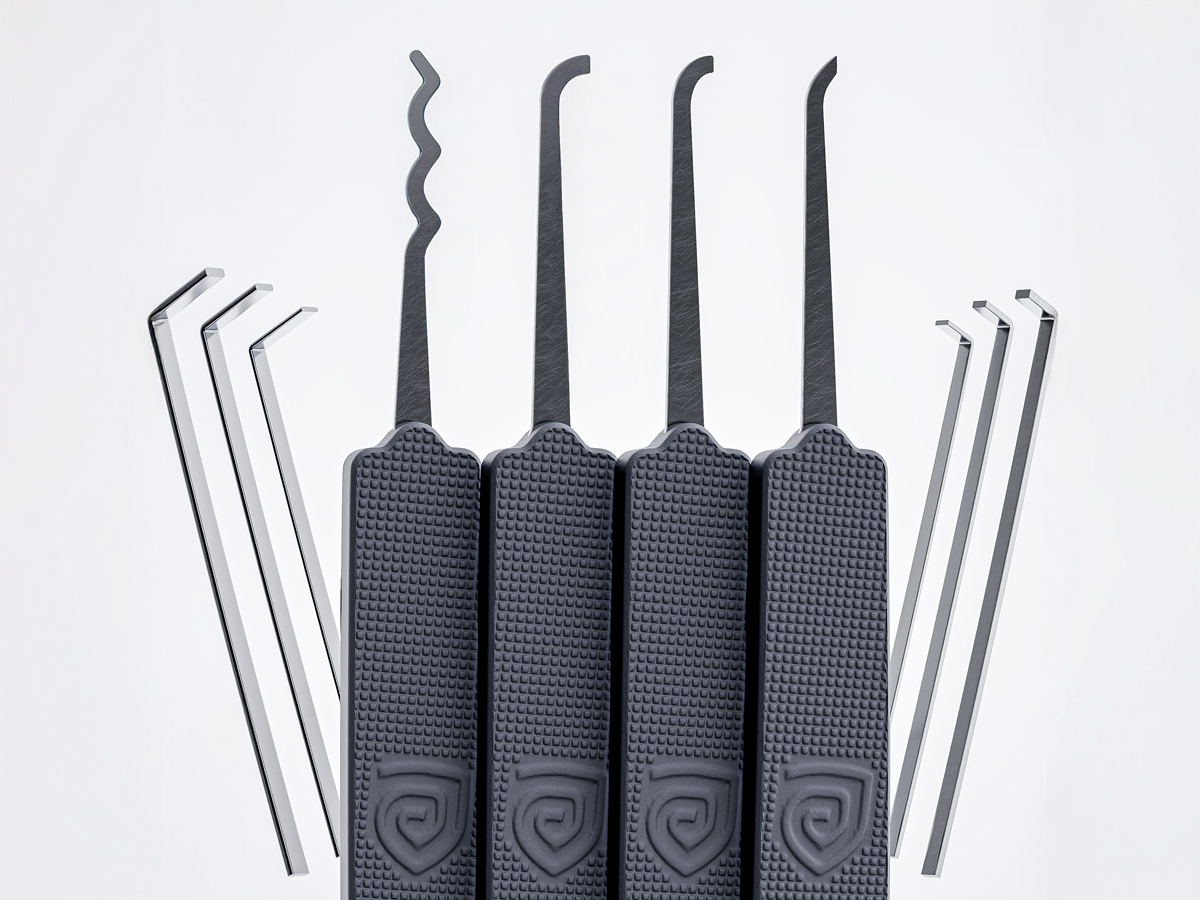
The first GrimGo lockpick sets have been delivered and user feedback is pouring in. In this article, I share the initial experiences, why this set was developed to prevent common issues such as bent picks, and what users think of the design and quality so far.
Author: Ties
The idea behind GrimGo
Let me start by explaining why this set even exists.
I see it happen every week: beginners buy a set of picks, enthusiastically get started, and within two weeks half of the picks are bent. Too much force used, wrong angle, it happens…
So I thought: what if I make a set that is resistant to that?
The concept: Thicker material, shorter shaft (according to FEA analysis 2.79× stronger than standard picks), optimized for beginner mistakes. A set that won’t break immediately while you’re still learning how much force to use.
It sounded good in theory. And the FEA analysis confirmed it: these picks are sturdy. But…
There is a difference between “strong” and “usable”.
What do the testers say?
I distributed prototype sets to lockpickers in the Netherlands and Germany. Beginners and advanced users. People testing at events, YouTube creators, club members. All with their own perspective.
And the feedback is clear: the concept is right, but the execution needs to be different.
The common thread: “This set works fine for simple practice locks, but as soon as it gets more complex, you run into limitations.”
Let me take you through what I hear.
Where the set performs well
First the good news, because there is some:
1. The concept works for beginners
What works well:
- Standard practice locks with transparent housing
- Simple padlocks up to 5 pins
- Basic cylinders with wide keyways
- Learning the basic single-pin picking technique
Multiple testers confirm: “For my first practice lock, this set works perfectly. The picks feel sturdy and I don’t worry about them breaking.”
2. Tension tools perform well
I hear this from multiple sources: “The tension tools provide the right control. They feel sturdy and give good feedback.”
The only piece of feedback was “Why don’t you make the tensioners double-sided?” The reason is that single-sided tension wrenches are easier to pull out of your case, but maybe we should prioritize functionality.
Tension is crucial. If it doesn’t work well, nothing works.
3. The compactness is appreciated
Many positive reactions to the idea of a small, organized set:
“As a beginner, it’s nice that you don’t immediately have 20 picks to go through. This set has exactly what you need to get started.”
That was exactly my intention. No analysis paralysis, just get started.
4. Strength is demonstrable
No one has broken a pick. Not even with too much force. The FEA analysis is correct, these picks are strong.
But here comes the catch: strength isn’t everything.
What really needs to change
Okay, time for the honest feedback. And let me state upfront: this was no surprise to me. I had consciously chosen thicker picks for durability. But the question was: how much usability do you sacrifice for that?
The answer: more than I wanted.
Problem 1: Paracentric keyways are a challenge
I hear this from several testers trying ABUS locks:
What happens:
With locks like the ABUS 55/40, ABUS Titalium 65/35, or BURG-WÄCHTER Karat, the keyhole is paracentric. The thick neck of the pick takes up so much space that you:
- Can’t reach the back pins properly
- Can’t turn the pick smoothly
- Scrape against the sides of the keyway
One tester summarizes it this way: “With my Southord and Sparrows picks, no problem at all. With the GrimGo picks, I have to fight against the keyway.”
Problem 2: Too little maneuvering space
With locks where you have to go under certain pins (like the ABUS MB84/40), a problem arises:
The combination of thick neck + wide BOK tensioner = too little space. You accidentally push other pins too far up. And when you try to correct, you lose the sets on the earlier pins.
It can be done, but it takes much more effort than with narrower picks.
Problem 3: Working part too short for complex locks
With locks with 6 or more pins (like the Master 410 LOTO or some European cylinders), the pick is simply too short:
The effect: The back pins are difficult to reach. And if the pick also gets stuck (which happens due to the thick neck), you have to fumble to get it loose. In doing so, you often lose your earlier work.
Suggestion from multiple testers: “Make the working part about a centimeter longer. That would greatly improve the handling.”
Problem 4: Finish needs to be better
I hear this from various sides:
Sharp edges: After prolonged use (15+ minutes), the sharp edges start to cut into your fingers. One tester even got a cut when the tension wrench slipped away.
That is simply unacceptable. A prototype can be unpolished, but it should not be literally painful to use.
More feedback on the finish:
- Plastic handles feel nice but have sharp spots that need to be sanded down
- Some picks arrived slightly bent
- Overall finish looks still sloppy
One tester even took their picks and tensioners to a file and gas burner to smooth out the sharp edges. That says enough.
Problem 5: Handle shape is debatable
Opinions about the handle shape vary:
- Some find them perfectly functional
- Others would prefer them to be round, so you can apply force in all positions
- The size and thickness are perceived by several people as “too large”
This is probably partly a matter of personal preference. But it is something to consider.
What are we going to do about it?
Alright, let’s be honest about what this feedback means.
My original choice
I consciously chose for:
- Thicker picks → stronger, less likely to break
- Shorter shaft → optimal for strength according to FEA analysis
- Sturdy material → resistant to beginner mistakes
The thought: “Let beginners make mistakes without their tools breaking immediately.”
What the feedback teaches me
The reality: A pick that doesn’t break but doesn’t work well on European locks is not what we wanted. Beginners get just as frustrated when they can’t open a difficult lock as when a pick bends.
And the feedback has made something very clear.
Prioritizing strength was a logical choice, but not the right one. Because a beginner practicing with these picks on an ABUS Titalium doesn’t think, “great that this pick doesn’t break” – they think, “why can’t I open this lock?”
The new priority: Usability first
For Generation 2, I will turn it around:
New design philosophy:
1. Usability – The pick must work on a wide range of locks
2. Durability – Strong enough for beginner use, but not at the expense of usability
In other words: better a pick that bends occasionally but always works, than a rigid pick that can’t open half of your locks.
Concrete adjustments for Gen 2
Geometry:
- Narrower neck – more space in paracentric keyways
- Longer working part – reach of at least 6-7 pins
- Subtler profile – better maneuverability
Finish:
- All sharp edges ground away
- Tumbled/polished finish
- Re-evaluate handles (possibly rounder)
- Better quality control before shipping
Material:
- Possibly experiment with other alloys for better feedback
- Finding a balance between strength and tactile response
What remains the same
Because not everything needs to change:
- ✓ Compact set concept (4 picks, 6 tensioners)
- ✓ Focus on beginners
- ✓ Tension tools (that work well), but maybe make them double-sided
- ✓ Transparent approach and feedback-driven development
Important nuance: The current set is not “bad” – it works perfectly for what it was designed for (simple practice locks). But I want a set that is more versatile.
When is Gen 2 coming?
Honest answer: I don’t know exactly.
What I do know:
- I’m not going to rush – this needs to be right
- More than 50 people have a prototype, so feedback is still coming in
- I will also test Generation 2 again before it becomes official
Expectation: somewhere between Q4 2025 and Q1 2026. But it will come when it’s ready.
Want to test it yourself?
The prototype is still available. And yes, you are reading all the feedback now so you know exactly what you’re getting into. This is not a polished final product – it is a functional prototype that works for simple locks but has limitations with more complex applications.
The deal: Test the set, provide feedback, and receive (more than?) €15.00 off Generation 2.
Do you have questions about the feedback? Feel free to email me. Transparency goes both ways.

More Lockpicking Blogs
Want to learn lockpicking? With the right lockpick set and our guides, you can open your first lock within just a few hours. Whether you choose a beginner lockpicking set or professional lockpick tools, our articles will teach you all the techniques step by step.
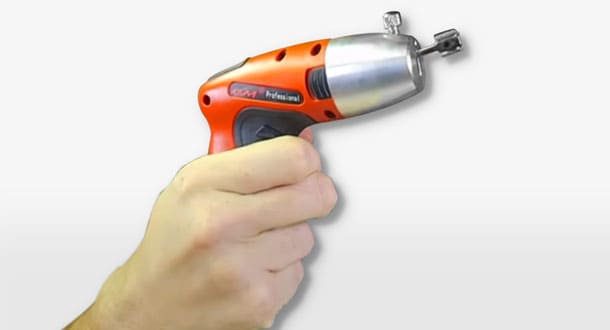
KLOM Electric Lockpick Gun Manual and Review
This comprehensive manual explains step by step how to assemble and use the KLOM electric lockpick gun. From charging the battery to mounting the head and applying the correct...

May 4th Remembrance Day: The Value of Freedom
On May 4th, we pause to remember the victims of World War II and commemorate the value of freedom. We reflect on the sacrifices made and the importance of...

Lockpickers United (LPU) – Belt Ranking System & Community
Lockpickers United (LPU) is an international community for lockpickers with a unique Belt Ranking System. This guide explains what LPU is, how to join via Reddit or Discord, how...
How Lockpickings is handling the Corona virus
Curious about how Lockpickings is dealing with the corona measures and lockdown? We will keep you updated on the impact on orders and deliveries, and answer frequently asked questions...