
-
Je winkelmandje is leeg
Ga naar de shop om producten in je winkelwagen te plaatsen
How can you improve in lockpicking?
Do you want to become faster and better at lockpicking? With these 6 practical tips, you'll learn why you should vary between locks, how to prevent frustration, why regular practice is essential, and how to find the right balance between raking and single pin picking.
Author: Ties
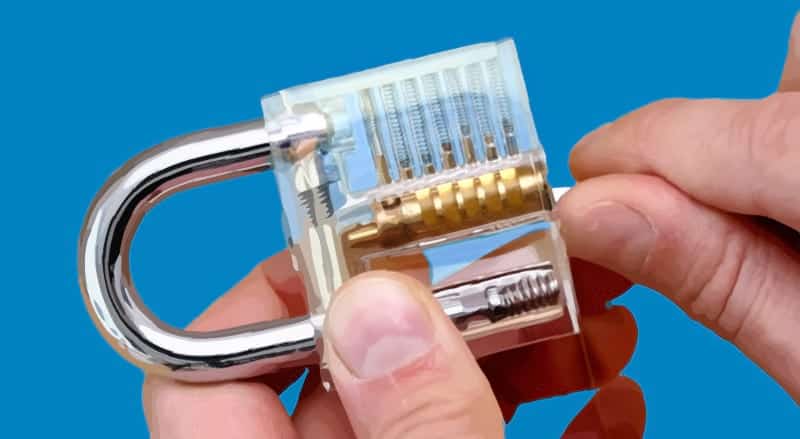
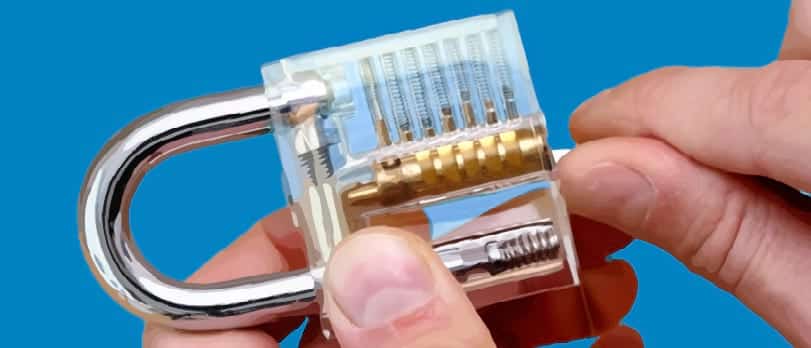
More and more people are getting “hooked” on lockpicking.
Of course, after a while, you also want to get better, but unfortunately, this is not the case for everyone. There are small mistakes you can make while lockpicking. As a result, you may not understand the sport, and it doesn’t matter how often and how long you practice.
To help you on your way, I have explained 6 tips below on how to improve in the lockpicking sport. Follow these tips, and you’ll soon see that things will get much better.
This way, you’ll be challenging yourself with more difficult locks in no time, and you can open them in an even shorter time. This keeps the lockpicking sport fun and challenging because the real enjoyment comes when you get better!
#1 Don’t limit yourself to one lock
If you keep limiting yourself to one lock, after practicing 10 times and successfully opening it three times, you will finally “understand” the lock. You will then get the idea that you are getting better at the lockpicking sport, but nothing could be further from the truth.
This one lock may become easier for you because you know it inside out, but other locks will still remain a challenge for you.
It’s true that you get better at picking this specific lock, but this is mainly because you’ve done it so many times that you’ve memorized how to do it.
If you want to improve at picking multiple types of locks, it’s important to keep practicing on different locks and not the same one.
This way, you will constantly encounter new locks and new challenges. This allows you to learn new techniques and keeps it fun and challenging!
So don’t limit yourself to one lock, but seek new challenges. Each lock is different, and every new lock you try to pick is also a new puzzle for you. This way, you will truly develop your techniques instead of focusing on just one lock.
With the same lock, you run the risk of picking it without thinking, and when you do it entirely from memory, that lock won’t teach you anything anymore. Therefore, it’s better for your technique to pick 100 different locks than to pick the same lock 100 times.
#2 Start with easy locks
While it’s good to challenge yourself, even from the start, it’s also incredibly important not to make it too difficult for yourself. A little challenge is good, of course, but making it too difficult will only discourage you.
By trying to pick locks that are far too difficult for you, you will only become frustrated, and in that way, you won’t enjoy it anymore.
Who knows, you might even completely stop with the lockpicking sport because you became so frustrated. Be patient and don’t rush into a too difficult lock. If picking locks is no longer fun for you, it will also be very hard to want to continue.
It’s important to stay calm and ensure that you don’t become too frustrated.
There are also separate steps you can take to ensure that you don’t become too frustrated while lockpicking and that it remains enjoyable.
If you notice that you are starting to get frustrated while picking a lock, take a few minutes to pause. Or even a few days or weeks. You can also pick easier locks in the meantime to regain some confidence.
#3 Keep practicing regularly
Practice makes perfect!
Make sure to strive to practice daily, even if it’s just for 15 minutes. If you don’t practice lockpicking for a long time, you’ll notice that it will also go much worse, and you’ll start forgetting your techniques.
By practicing, you repeat the techniques you learn along the way and gradually develop these techniques further. By continuing to practice regularly, you’ll notice that you are getting better and you can really go far with this.
#4 Don’t rely on transparent locks
It’s understandable that you prefer to practice with transparent locks at the beginning, but try to do this as little as possible.
Transparent locks only show you how lockpicking works and how locks are constructed, but they are not suitable for practicing the sport of lockpicking.
If you really want to get good at lockpicking, you will have to set aside the transparent locks. You won’t get good at lockpicking by practicing with a transparent lock, but by using regular locks.
#5 Make sure you have the right lockpick set
A common mistake among beginners is that they go for the cheapest lockpick set they can find. Unfortunately, these lockpicking sets are of lower quality, and it will be harder to improve your lockpicking skills with them.
When you buy cheap sets, the finishing is less perfect. You also have a higher chance of materials that can break, easily bend, or even rust over time. All these disadvantages will make picking locks more difficult.
By purchasing a high-quality lockpicking set, you ensure that you have the right tools to start this fun sport!
Unfortunately, it will cost you a bit more, but this way you can practice properly and really get good at picking locks. You will also only need to buy your tools once and then not have to for a long time, while with the cheaper sets, you will have to replace the tools regularly.
Moreover, you don’t have to spend hundreds of euros when buying your tools, but just make sure you have a collection of tools that you can use for most locks.
In any case, ensure you have high-quality tools for lockpicking. The tools you use while lockpicking have a significant impact on your performance, especially at a later stage when your fingers become more sensitive to the subtle changes in the lock.
#6 Don’t pay too much attention to raking
When it comes to lockpicking, it’s not just about getting the lock open, but also about doing it as quickly as possible. This is important for both beginners and experts in the sport of lockpicking. However, you need to be careful not to rely too much on the raking technique.
Of course, this technique is important to master as a lockpicker, but with single pin picking, you can develop yourself much further than with raking. If you focus too much on the raking technique, you will have a false impression of how good you actually are in the lockpicking sport. At first, it may seem to you that raking works well with the locks you are using, and you will notice that you can open these locks quite quickly.
Unfortunately, at some point, you will encounter more locks that you cannot open with raking, and for this, you will need more and better techniques. When picking locks that are a bit more complicated, you will see that you need to master the single pin picking technique much better, as well as the pressure you exert.
Imagine that you are already so far in lockpicking, but then you have to go back to easier locks because you haven’t yet mastered the single pin picking technique.
This will be even more frustrating for you when you can’t open the easy locks with the single pin picking technique and you would prefer to use raking to get the lock open.
Therefore, make sure that even at the beginning, you don’t focus too much on raking and primarily on mastering the pressure you exert on the tension wrench and ensure that you have a good grasp of the single pin picking technique.

More Lockpicking Blogs
Want to learn lockpicking? With the right lockpick set and our guides, you can open your first lock within just a few hours. Whether you choose a beginner lockpicking set or professional lockpick tools, our articles will teach you all the techniques step by step.

Survival Tips from Lockpickings
Lockpicking is more than a hobby; it is also a valuable skill for self-reliance. In this article, we combine lockpicking with practical survival techniques: how to find drinking water,...
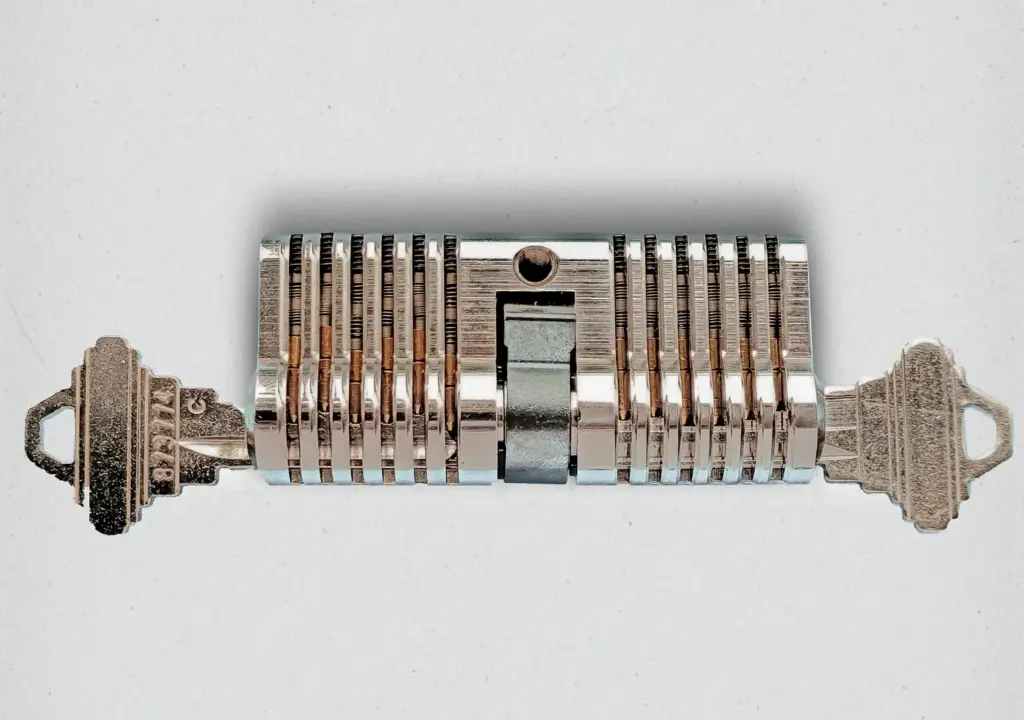
Cylinder Lock Opening or Replacing? This is How a Cylinder Lock Works
How exactly does a cylinder lock work, and when should you replace it? In this guide, we explain the basic components of a pin tumbler lock, discuss security classes...
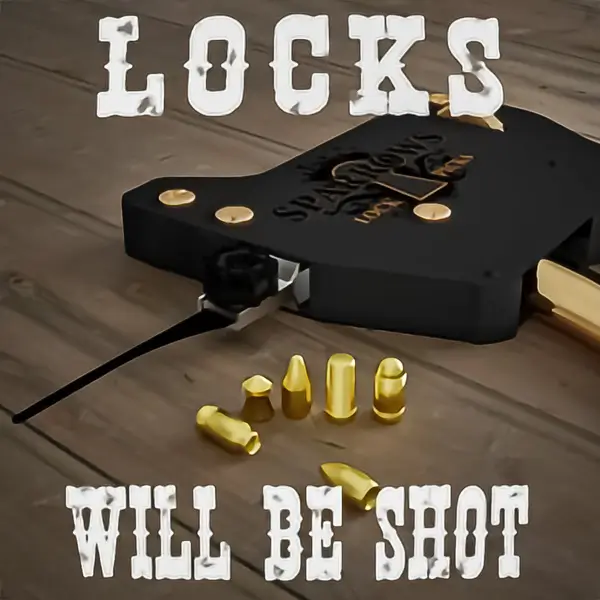
How does a Lockpick Gun work?
A lockpick gun (snap gun) uses kinetic energy to separate the pins in a cylinder lock, similar to the Newton's cradle principle. In this article, I explain the physics...
Opening a Padlock with a Belt
A simple belt turned out to be enough to open a padlock, as a surprising video shows. This story illustrates how creativity can solve a problem without special tools...