
-
Je winkelmandje is leeg
Ga naar de shop om producten in je winkelwagen te plaatsen
Advice on Buying Your First Lockpick Set for Beginners
Buying your first lockpick set can be overwhelming with all the brands and options available. In this article, I share my personal advice on which set is best for beginners, what to look for in terms of quality and price, and which pitfalls to avoid. This way, you start your lockpicking hobby well-prepared.
Author: Ties
Advice on Buying Your First Lockpick Set for Beginners [2025]
When I bought my first lockpick set in 2010, I had no idea what to look for. I saw a “mega deluxe 32-piece set” for €15 on a well-known Chinese webshop and thought: jackpot! Three weeks later, when the package finally arrived, I had already broken two picks within an hour. The metal was so soft that everything bent as soon as I felt any resistance.
I want to spare you that frustration. I don’t offer such sets in Lockpickings either. After years of experience and hundreds of conversations with beginner lockpickers, I now know exactly where most people go wrong. And no, the answer is not “just buy the most expensive set” – it’s about making smart choices that fit how you want to learn.
Why Cheap Sets Cost You Money in the Long Run
Let me be honest: I understand the temptation. You want to try lockpicking without spending a fortune right away. That’s logical. But here’s the problem with those ultra-cheap sets you see everywhere:
The metal is so weak that you have no idea if you feel something in the lock or if your pick is just bending. That’s the difference between learning to ride a bike on a regular bike or one with wooden wheels. Technically, it can be done, but on your first ride in the Netherlands, you prefer that regular bike.
I see it every week in my inbox: “Ties, I’ve been practicing for three weeks now, but I can’t feel anything!” When I ask which set they have, in 90% of cases, it’s one of those huge Goso sets or a no-name brand from a marketplace. The problem isn’t in their technique – it’s in their tools.
Warning for Beginner Lockpickers
Cheap picks made of soft metal do not give you good feedback. You learn bad techniques because you compensate for inferior tools. This is the difference between frustration and fun in your first weeks.
What Do You Really Need? (Spoiler: Much Less Than You Think)
Here’s where the industry tricks you: they sell sets with 20, 30, or even 50 picks. “Complete for every situation!” it says. But you know what? In my daily practice, I use maybe 5 different picks. The rest just sits in my toolbox collecting dust.
For a beginner, here’s what you need:
- 3 Hook picks – A short hook, medium hook, and deep hook. These are your workhorses for Single Pin Picking (SPP).
- 1-2 Rake picks – A Bogota or City Rake for faster opening methods on simpler locks.
- 3-4 Tension wrenches – Different thicknesses for Bottom of Keyway (BOK) and Top of Keyway (TOK) tensioning.
That’s it. Really. Everything beyond that is nice if you want to go further, but for your first 6-12 months, this is completely sufficient.
My Personal Tip: I have been working with lockpicking for years and still mainly use my Sparrows Kick Start set. Simple, effective, reliable. No unnecessary clutter.
Material and Quality: The Difference Between 0.020″ and 0.025″
Now it gets a bit technical, but this is crucial to understand. Lockpicks come in different thicknesses, usually measured in inches:
- 0.015″ – 0.018″: Super thin, for very narrow European locks. Difficult for beginners because they break easily.
- 0.020″ – 0.025″: The sweet spot for beginners. Strong enough not to break immediately, thin enough for most locks.
- 0.030″+: Thick picks for American locks with wide keyholes.
Here’s my golden rule: always use the thickest, strongest pick that still fits in your keyhole. Why? Because thicker picks give you better feedback. You feel much more clearly what is happening in the lock.
The problem with many beginners is that they immediately buy thin picks “because then I can open everything.” In theory, that’s correct. In practice, it means that your first months will be hell because you feel nothing and everything breaks.
American vs. European Locks: This Determines Your Tool Choice
And here comes the most important question: on which locks are you going to practice?
If you want to start with American practice locks (Sparrows, Master Lock, etc.), then you want picks that are 0.025″ to 0.030″ thick. These locks have wide keyholes and are intentionally designed for lockpick beginners. They are also nuanced and easier to open, which gives confidence in your first weeks.
Do you want to get started with European locks right away (Abus, EVVA, our own stuff)? Then you need thinner picks – often 0.020″ to 0.022″. European keyholes are narrower and locks are generally trickier. More fun if you already have some experience, more frustrating if you’re just starting out.
My Advice for Beginners
Start with American practice locks and 0.025″ picks. Once you have mastered the basics (after about 2-3 months of consistent practice), upgrade to thinner picks and more challenging European locks. This way, you build your skills progressively without throwing yourself into the deep end right away.
For example, check out the practice locks in our range – we have both American and European options that are perfect for different experience levels.
5 Mistakes 90% of Beginners Make (And How to Avoid Them)
Mistake #1: Too Much Raking, Too Little Single Pin Picking
Raking seems faster and easier. You slide your pick back and forth, hear some clicks, and *POOF* – the lock is open. Instant gratification. But the problem? You learn very little from it.
I recently saw someone complaining on a forum that after 6 months, he could only rake and had absolutely no idea how SPP worked. That’s like learning to type with two fingers – it works, but you miss the fundamentals.
My advice: Spend 70% of your practice time on SPP, 30% on raking. This way, you learn so much more about how locks work, and that knowledge pays off endlessly.
Mistake #2: Too High Expectations Too Soon
Lockpicking videos on YouTube make it all look so simple. LockPickingLawyer opens a high-security lock in 45 seconds while sipping his coffee. That creates unrealistic expectations.
The reality: opening your first lock can take 30 minutes to 2 hours. My first ML3 (a super basic beginner lock) took me 45 minutes. And you know what? That’s completely normal.
Mistake #3: Not Buying a Practice Lock, Just a Set
I see this way too often: people buy a nice lockpick set and think “I’ll practice on that old padlock in the shed.” Spoiler: that old lock in your shed is probably completely rusted, full of dirt, or just impossible to open as a beginner.
You need specific practice locks. Transparent locks are fantastic for seeing what happens. Otherwise, start with a Master Lock #3 or an Abus 55/40 – both are great starter locks that are not too difficult but educational.
Start Smart
Buying a beginner set and a suitable practice lock together saves you weeks of frustration. Check out our complete beginner bundles that include everything you need.
Error #4: Too Much Pressure on the Tension Wrench
This is THE biggest technical mistake. Beginners think: more pressure = better. Nope. Too much tension and your pins are so tightly clamped that you can hardly move them.
The right tension is like the difference between a firm handshake and crushing someone’s hand. You want control, not brute force.
Error #5: Giving Up After Three Attempts
Lockpicking is a skill. Just like playing guitar or cooking – it requires practice, patience, and accepting that your first weeks will be a bit rough.
I see so many people who give up after a week because “it doesn’t work.” Give yourself at least a month of serious practice before drawing conclusions. Most people have their first “aha!” moment somewhere between week 2 and 4.
Budget: What Should You Realistically Invest?
Let’s just be honest about the numbers:
- €10-20: Budget sets that “work” but will probably frustrate you. Only do this if you’re really strapped for cash.
- €30-50: Sweet spot for beginners. You get quality tools that last for years.
- €70-100: Premium beginner sets with extras. Nice if you’re sure you want to take this hobby seriously.
- €100+: Professional sets. Buy this only if you already have experience and know what you want.
My unvarnished opinion? Go for the €30-50 range. It’s the minimum to get quality tools that won’t break immediately, without investing €100 right away in a hobby you’re not sure is for you.
For concrete recommendations in different price ranges, check my extensive blog about the 6 best lockpick sets for beginners – where I dive deep into specific products per budget.
Think Long Term: Upgrading vs. Buying Good Right Away
Here’s an interesting question I often get: “Shouldn’t I start cheap and upgrade later?”
In theory: yes. In practice: usually not smart.
Why? Because cheap tools cost you two things:
- Time – You learn slower because your tools give you poor feedback
- Motivation – Frustration from bad tools makes people stop before they reach the fun phase
Do the math: €15 on junk that you throw away after 6 weeks + €40 on a decent set = €55. If you had spent €40 right away, you would have saved €15 and had 6 weeks less frustration.
My Tip
Buy good once instead of cheap twice. Your picks from brands like Sparrows, Peterson, or Multipick will literally last for years. I’m still using my first Peterson hooks from 2018.
Where to Start as a Complete Beginner? My Step-by-Step Approach
Okay, we’ve covered a lot of theory. Let’s make it practical. If you were to start lockpicking today, what would I do?
Step 1: Choose Your Starting Area
First, determine: American or European locks? If you’re unsure, go for American. It’s nuanced easier and you’ll build confidence faster.
Step 2: Choose a Set with These Features
- At least 3 different hook picks
- 1-2 rake picks for variety
- Multiple tension wrenches (both BOK and TOK)
- Stainless hardened steel (no soft metal)
- Good grip on the handles (makes a real difference)
Step 3: Buy a Suitable Practice Lock
For American sets: a Master Lock #3 or Sparrows Revolver are perfect.
For European sets: Start with an Abus 55/40 or 64TI/40.
Step 4: Invest in Learning Material
You have tools, you have a lock – now you need knowledge. Read my other blogs about how lockpicking works and Single Pin Picking techniques. Seriously, that 30 minutes of reading will save you weeks of trial-and-error.
Step 5: Give Yourself at Least a Month
Commit to at least 15-30 minutes of practice per day for a month. After that month, you’ll have a much better idea if this hobby is for you.
Your First Step into the World of Locksport
Let’s summarize. Buying your first lockpick set is really not complicated, but a few smart choices make the difference between frustration and fun:
- Invest at least €30-50 in quality tools
- Choose a maximum of 5-7 picks – you really don’t need more
- Match your pick thickness to your locks (0.025″ for American, 0.020-0.022″ for European)
- Always buy a practice lock as well
- Focus 70% on SPP, 30% on raking
- Give yourself at least a month before you give up
Lockpicking is a fantastic hobby. It is zen-like, educational, practically useful, and just cool to be able to do. But like any skill: you need the right tools to succeed.
The investment you make now in a good beginner set largely determines whether you will still be excitedly opening locks in 6 months, or if you will have secretly thrown your picks somewhere in a drawer.
Be smart. Buy well once. And enjoy the journey. I
help dozens of beginners daily with their first set and see what works and what doesn’t. Questions? Feel free to send me a message – I’m happy to help you further.
Frequently Asked Questions
Which lockpick set is best for absolute beginners?
For absolute beginners, I recommend sets in the €30-50 range with 5-7 picks. The Sparrows Kick Start or SouthOrd C801 are both excellent choices. They contain the essential picks without unnecessary extras, are made of quality metal, and will last for years.
Should I buy American or European locks to practice?
For beginners, I recommend American practice locks. They have wider keyholes, are slightly easier to open, and provide quicker success experiences. This builds confidence. After 2-3 months, you can switch to more challenging European locks. Always match your pick thickness to your locks: 0.025″ for American, 0.020-0.022″ for European.
How much should I spend on my first lockpick set?
€30-50 is the sweet spot. For this budget, you get quality tools that will last for years. Sets under €20 are often of such poor quality that they slow down your learning process. Sets over €70 are usually overkill for beginners – you only need those extra things once you have experience.
How many picks do I really need as a beginner?
You only need 5-7 picks: 3 hook picks (short, medium, deep), 1-2 rake picks, and 3-4 tension wrenches. Sets with 20+ picks are marketing tricks – you will never use most of them. Focus on quality over quantity.
Why do my cheap lockpicks keep breaking?
Cheap picks are often made of soft, untempered metal. This means they bend under pressure instead of staying stiff. The result: broken picks and poor feedback while picking. Invest in picks made of stainless hardened steel from brands like Sparrows, Peterson, or Multipick – they literally last for years.
How long does it take before I get my first lock open?
Opening your first lock can take between 30 minutes and 2 hours – that is completely normal. With consistent practice (15-30 minutes a day), most people can open basic locks like a Master Lock #3 within 1-2 weeks. Don’t expect it to go as quickly as in YouTube videos – those people often have years of experience.
Should I learn raking or single pin picking first?
Start with Single Pin Picking (SPP). Although raking seems faster, you learn much less from it. Spend 70% of your practice time on SPP to learn the fundamentals, and 30% on raking for variety. SPP skills will make you a much better lockpicker later on.
What is the difference between BOK and TOK tension?
BOK (Bottom of Keyway) means that your tension wrench is at the bottom of the keyhole. TOK (Top of Keyway) means that your wrench is at the top. TOK gives more space for your picks but is slightly harder to control. Start with BOK and experiment with TOK later when you have more experience.

More Lockpicking Blogs
Want to learn lockpicking? With the right lockpick set and our guides, you can open your first lock within just a few hours. Whether you choose a beginner lockpicking set or professional lockpick tools, our articles will teach you all the techniques step by step.

Lockpickers United (LPU) – Belt Ranking System & Community
Lockpickers United (LPU) is an international community for lockpickers with a unique Belt Ranking System. This guide explains what LPU is, how to join via Reddit or Discord, how...
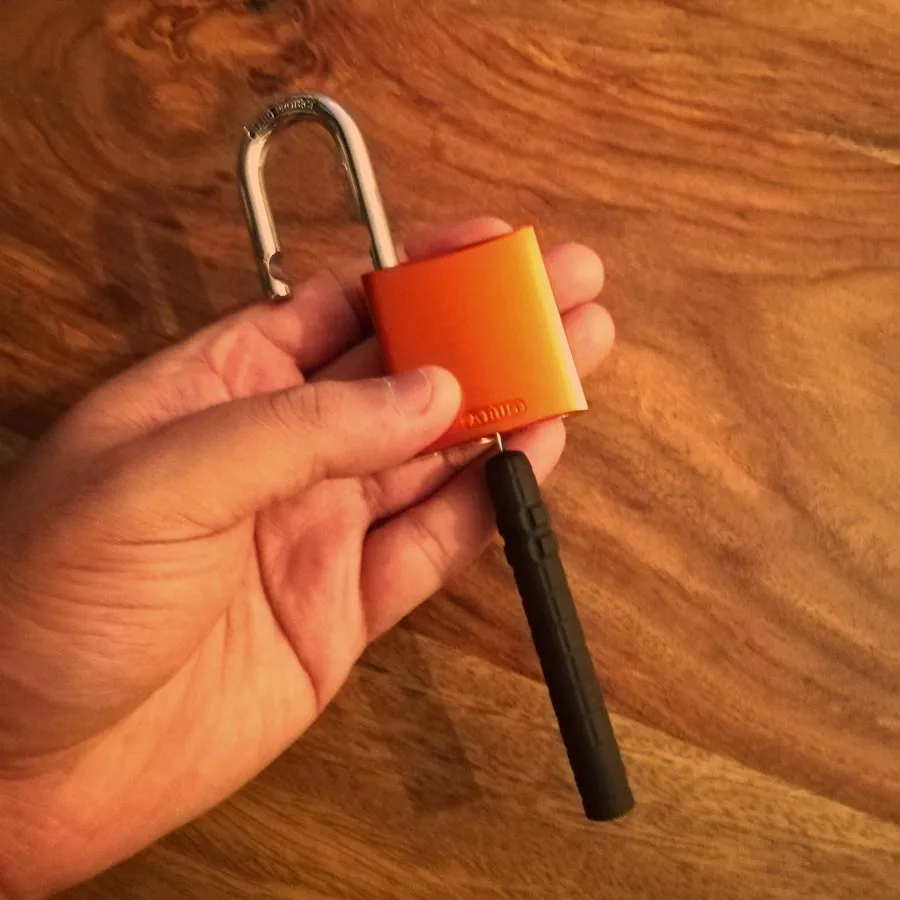
ABUS Bypass Driver – Open ABUS 72/40 Padlock
The ABUS 72/40 is a popular padlock, but it has a notable weakness: the Bypass Driver technique. In this article, I will explain step by step how this bypass...
Opening a Lock with a Paperclip [2025 Update]
We explain how to open locks with paperclips. We explore the history and mechanisms of padlocks and provide a detailed guide on using paperclips as lockpick tools in the...

Geocaching in the Netherlands
Geocaching is a popular outdoor activity where you search for hidden caches using GPS. Discover the history of this hobby, how geocaches work, and how lockpicking sometimes plays a...