
-
Your shopping cart is empty
Go to the shop to add products to your cart
Learn Lockpicking – Raking a Lock
Raking and rocking are two of the fastest lockpick techniques to open a lock without needing to feel the exact feedback of single pin picking. In this article, I explain how the rake and rocking techniques work, which rakes (S-rake, City rake, Bogota) best fit which type of lock, and how security pins can frustrate these techniques.
Author: Ties
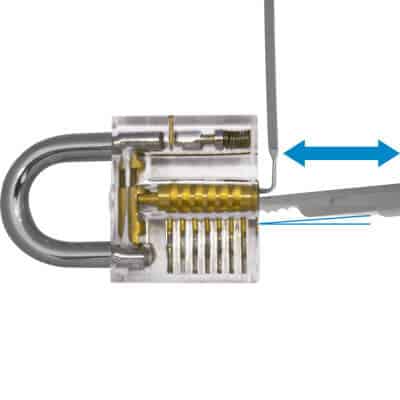
Learn Lockpicking – Raking a Lock is one of the fastest ways to open a lock, often quicker than Single Pin Picking (SPP). If you’re new to lockpicking or want a more efficient technique, raking is ideal for getting that satisfying click.
Raking is a lockpicking technique that’s easy to learn and offers a fast method to open many types of locks. It’s one of the simplest and most beginner-friendly ways to start your journey in lockpicking. With minimal practice, you can open basic locks in seconds using this method.
Once you understand how to use a tension wrench, you’ve already mastered the trickiest part of raking. The tension tool provides the control needed, while the rake lock pick does the rest. With gentle pressure and a simple raking motion, the lock can be fooled into thinking a key is inside.
Any beginner can use the rake technique in lock picking to start openening locks. With practice, you’ll develop the skills needed to open more complex locks, leading to becoming a true lockpicking professional.
Is Raking a Beginner’s Technique?
Yes, raking is often favored by beginners because it doesn’t require the precise feedback needed for single pin picking. This method allows new lockpickers to successfully open their first locks without fully understanding each pin’s behavior. However, with practice and attention, raking can become an incredibly effective and quick way to open locks.
While it’s great for building confidence by opening your first lock, the technique does require finesse. We’ll break down the best tools, tension techniques, and rake motions for you to master the raking technique.
Check out this video tutorial to watch raking in action.
The Raking Technique Explained
Raking involves rapidly “scrubbing” a rake lockpick back and forth inside the lock while applying light tension with your wrench. This motion aims to push several pins to the shear line without picking each one individually. It’s a versatile technique, as it can manipulate multiple pins simultaneously.
Now that you know the basics, let’s discuss the advantages of raking: speed and simplicity. Several types of lockpicks (or rakes) exist, each with its own style of movement. It’s a good idea to test different rakes to improve your lockpicking skills.
Rocking Technique
The “rocking” technique simulates the back-and-forth motion of a rocking chair. Instead of scraping, you’re gently rocking the pick inside the lock, making subtle upward and downward movements to nudge the pins to the shear line.
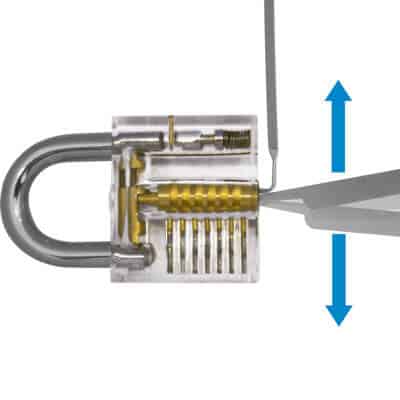
For the rocking technique, a City Rake or L-Rake is ideal. Insert the rake to the back of the lock, gently apply tension, and begin rocking. This adds a slight variation to your standard raking motion.
Hybrid Picking
Hybrid picking combines raking and single pin picking (SPP) to unlock complex locks more efficiently. This method is ideal for locks with a mix of easy and difficult pins.
The process starts with raking. Insert a rake into the lock, apply tension with a tension wrench, and scrub the pins to set as many as possible. After some pins have set, switch to a hook pick to manually pick the remaining binding pins.
Hybrid picking is faster than SPP alone but provides more precision than raking. It’s especially useful for locks with security pins, where raking alone won’t work. By combining speed and control, hybrid picking offers the best of both worlds. This makes it a favored method among lockpickers dealing with intermediate to advanced locks.
Understanding the Shear Line
The core concept of lockpicking is to push the pin stacks to the shear line. The shear line is the gap where the plug rotates, separating the plug from the housing. Most pin tumbler locks have 5 or 6 pin stacks that need to align at this line to open.
When using a tension tool, the goal is to keep the key pin in the plug while forcing the driver pin into the housing. Once all pins reach this shear line, the lock will turn.
Popular Rake Types
There are several popular types of rakes, each designed for different lockpicking situations. Here are a few you might want to try:
Snake Rakes or S-Rakes
These lockpicks are named for their distinctive S-shaped head. The snake rake is popular among enthusiasts for its ability to manipulate multiple pins in one go. Try using a scratching or scraping motion with this pick to set the pins.

City Rake or L-Rake
The City rake gets its name from its skyline-like silhouette. With its saw-like edges, it resembles a key, allowing for efficient manipulation of the lock’s pins. This rake can be used by “rocking” or “scrubbing” motions depending on the lock.

Tiple Peak Rakes
The Triple Peak rake (or Bogota rake) was originally designed by Ray Conners, based on the mountain ranges surrounding Bogotá. With its peaks and valleys, the Bogota rake is one of the most effective rakes for pin tumbler locks, especially those with varying pin heights. Ray still handcrafts these rakes and sells them occasionally.

These rakes are highly effective and unique, making them a favorite among hobbyists and professionals alike. You can find a Bogota rake set here.
Bogota Technique
The best way to use a Bogota rake is with a jittery motion. Think of it as moving the rake like you’ve had too much coffee – rapid and with quick, controlled shakes. Many lockpickers find the Bogota rake particularly effective for locks with varied pin heights.
In conclusion, raking is a fast, effective technique for beginners and pros alike. If you have any questions about raking or lockpicking in general, feel free to contact us. We’re happy to help!

More Lockpicking Blogs
Want to learn lockpicking? With the right lockpick set and our guides, you can open your first lock within just a few hours. Whether you choose a beginner lockpicking set or professional lockpick tools, our articles will teach you all the techniques step by step.
Bump Keys and What Property Managers Need to Know
Bump keys or bump keys can easily open pin cylinder locks. This article explains how bumping works, how effective it is, and how you can tell if a lock...
How Do I Open a Mailbox? Dutch Mailbox Locks
Mailbox blocked or key lost? Dutch mailboxes primarily use wafer locks and pin tumbler locks. In this article, we explain how these locks work, what the differences in security...

Lockpicking and Bumping
Discover how bumping works as a lockpicking technique to open pin tumbler locks. We explain how a bump key functions, which methods such as the Rebound and Micro-Movement methods...

Survival Tips from Lockpickings
Lockpicking is more than a hobby; it is also a valuable skill for self-reliance. In this article, we combine lockpicking with practical survival techniques: how to find drinking water,...