
-
Your shopping cart is empty
Go to the shop to add products to your cart
Opening Ancient Roman Miniature Lock with LWL
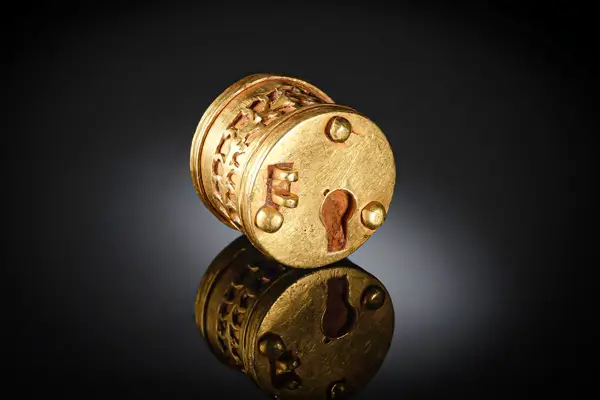
Archaeologists from the LWL found a gold Roman lock measuring 1.1 by 1.2 cm. A 3D neutron CT scan revealed the mechanism.
Author: Ties
Door Ties from Grimbergen · Last updated: October 2026
Archaeologists from the Landschaftsverband Westfalen-Lippe (LWL) discovered a Roman lock made of gold measuring only 1.1 by 1.2 cm. The miniature lock, dating from the 3rd or 4th century AD, was found in Petershagen-Frille and made public in 2025. Using a 3D neutron CT scan, the LWL mapped the mechanism inside.
Such a find shows how old the types of locks we still know today are.
The story behind the Roman miniature lock
Who used the lock, and for what purpose?
The small lock secured valuable items, such as jewelry boxes. According to the LWL, it was made in a provincial Roman area. Dr. Barbara Rüschoff-Parzinger states that this type of lock was used for small objects. Prof. Dr. Michael Rind points out that a gold miniature lock like this is unique in Europe. Moreover, it is the northernmost find of such a lock in Germany.
Source: press release LWL, January 28, 2025.
How does the lock work? CT scan and reconstruction
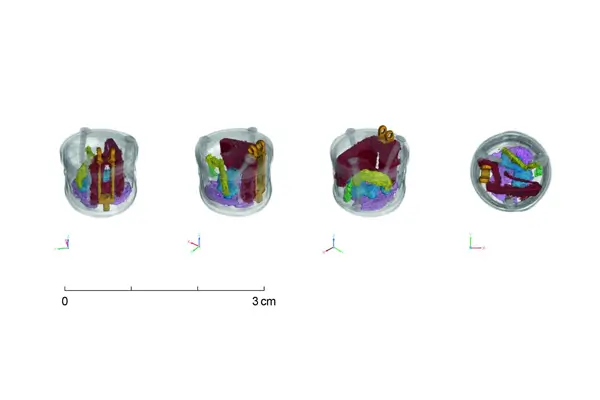
The CT scan reveals the inner workings
The 3D neutron CT scan shows a sturdy frame with a built-in spring. The bolt and the small key piece are also clearly visible. This allowed the researchers to document the construction without opening the lock.
Scale model of 4:1
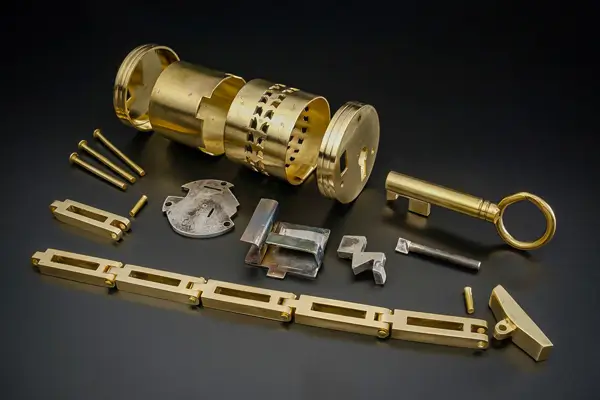
Based on the scan, a scale model of 4:1 was made from brass and steel, among other materials. It demonstrates how the frame, spring, and bolt work together to lock the mechanism. The scan also shows damage to the mechanism: someone likely attempted to break the lock open at some point.
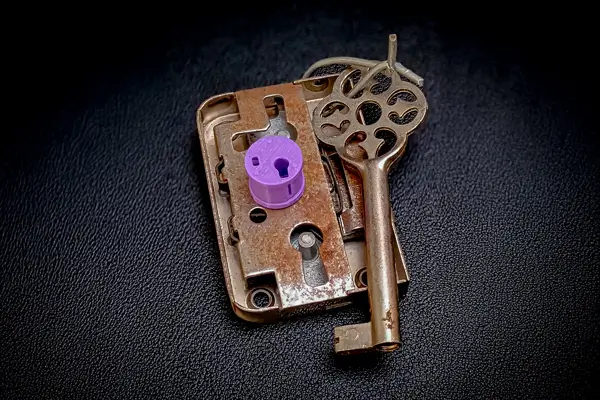
CAD file and 3D printed mock-up via TOOOL
For tech enthusiasts, a CAD file is available via TOOOL Netherlands. With it, you can experiment with your own reconstructions. The 3D printed mock-up in purple filament shows how the lock works. Check it out at TOOOL Blackbag.
Why is a gold lock so special?
Roman locks were usually made of iron or bronze. Gold was precious and only used for items of great value. According to the LWL, no comparable gold miniature lock has been found in Europe. The lock was discovered in 2023 and presented in 2025. It says a lot about the craftsmanship of the time and the status of the owner. To learn more about how locksmiths and lockpickers challenged each other throughout the centuries, read about the history of lockpicking.
Source: press release LWL, January 28, 2025.
Get started
Do you have an old lock, for example from a cabinet or chest? With tools for old locks, you can learn how such simple mechanisms work.
Practice only on locks that belong to you or for which you have permission – and never on locks that are in use. Also read whether lockpicking is legal.
Frequently asked questions
How big is the Roman gold lock?
Only 1.1 by 1.2 cm. It dates from the 3rd or 4th century AD.
How does a 3D neutron CT scan work?
Neutrons penetrate through metal. This creates an image of the inside of the lock without having to open it.
Why is the lock made of gold?
Gold was very precious in Roman times. A gold lock indicates an owner of high status and exceptional craftsmanship.
What do we learn from the scale reconstruction?
The model makes visible how the frame, spring, and bolt work together in a very small form.
Next step: History of lockpicking: the unpickable lock

More Lockpicking Blogs
Want to learn lockpicking? With the right lockpick set and our guides, you can open your first lock within just a few hours. Whether you choose a beginner lockpicking set or professional lockpick tools, our articles will teach you all the techniques step by step.

Rock’A Lock’A BANG BANG!
Sparrows is hosting the unique lockpick event ROCK'A LOCK'A BANG BANG 2024 in a real prison in Canada. Read all about the intensive training, exciting activities like breaching and...
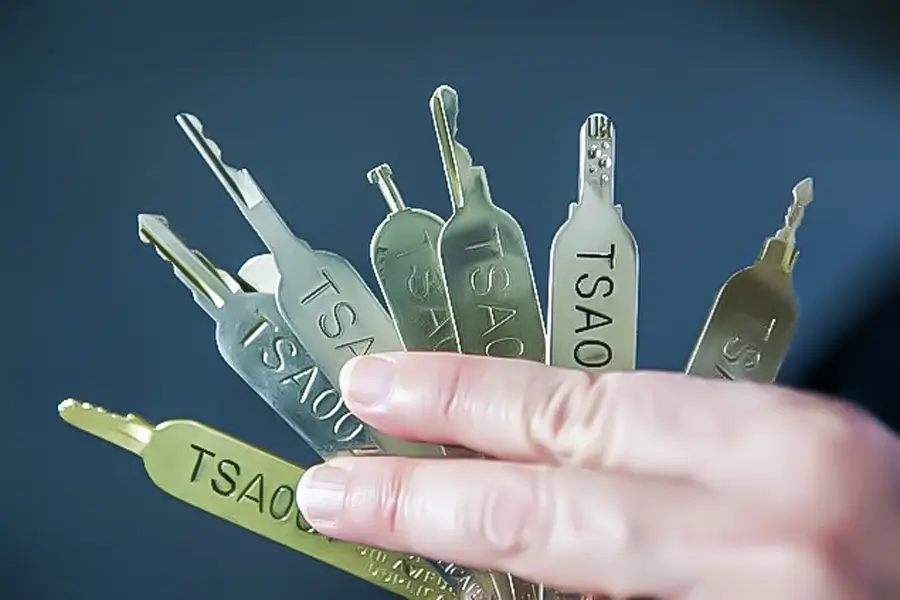
Replicating a TSA Master Key with a Photo
TSA locks have a secret master key that allows baggage inspectors to open suitcases. When a photo of all TSA keys appeared online, lockpickers could easily replicate them. This...
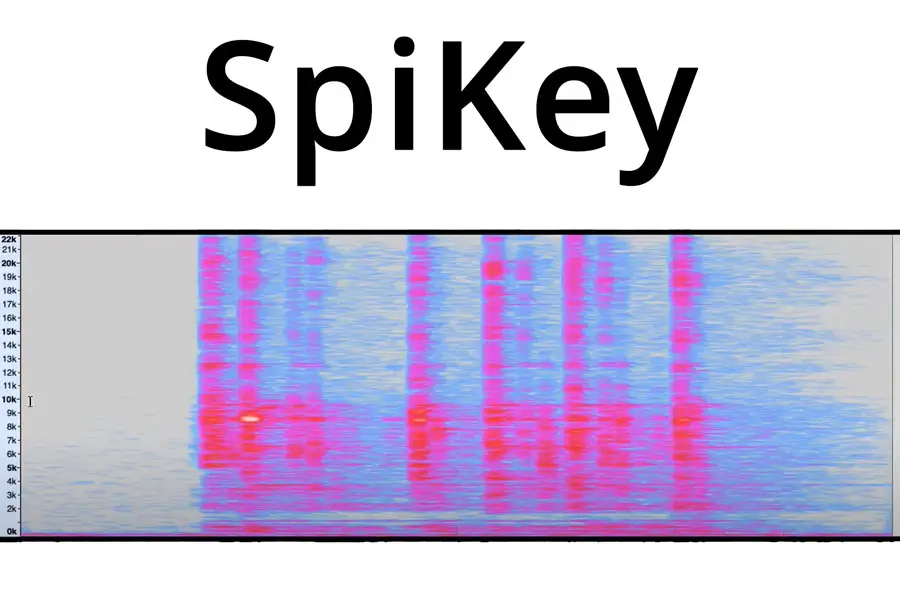
How sound can betray your key and open your lock
Researchers from the National University of Singapore discovered that the sound of a key in a lock reveals what that key looks like. With the SpiKey app and just...
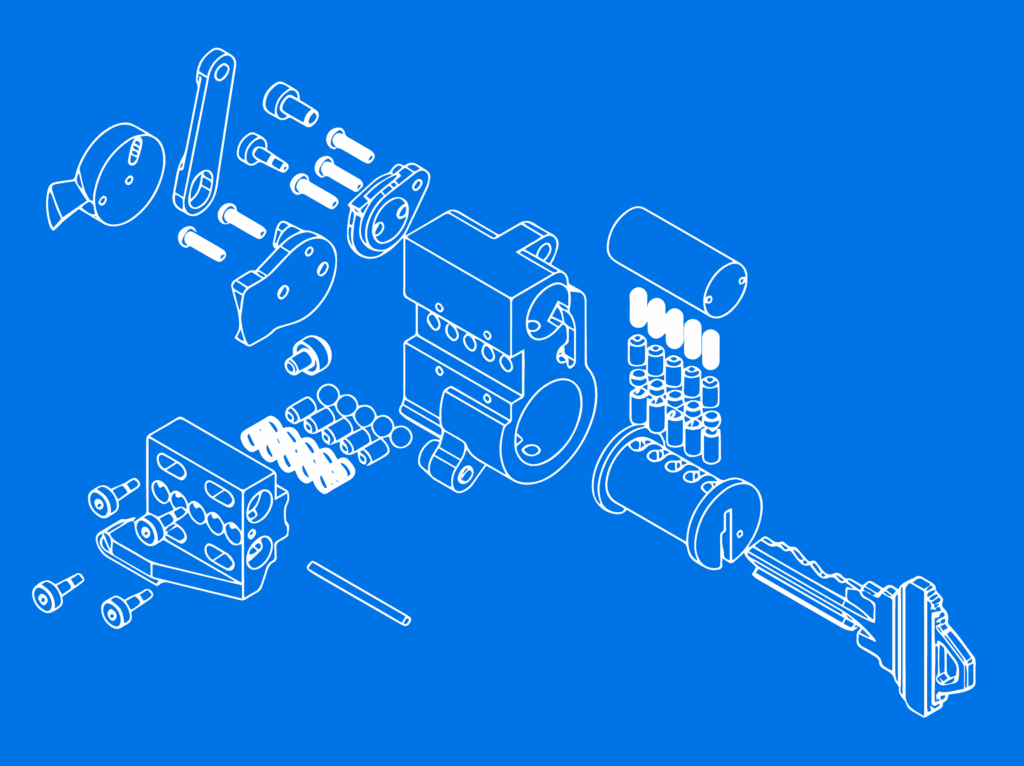
The Unpickable Lock
Are there locks that are truly unpickable? We examine the latest attempt by YouTuber Works By Design, along with previous attempts by Stuff Made Here and Andy Pugh. You...